Nov 4 2012

Call them Okayama girls

Okayama Castle


By Fred Varcoe

I always thought Okayama was a fairly industrial type of place. Still, my opinion was immaterial as it was a place I never stopped at and never thought I’d visit. It’s famous for pink peaches, a green garden, a black castle and some stupid mythical kid (Momotaro, the peach boy), but really it’s just an ordinary provincial town between Kobe and Hiroshima.
I tried to gauge the buzz of the place by engaging in conversation with two very hot schoolgirls. Both had their uniform skirts hoisted high, one had blue contacts and they were good-looking girls.
“Where you going?” I asked casually, detecting that they really wanted to get to know me.
“Station,” came the reply with a giggle. Not a schoolgirl giggle really; childish, yes, but not stupid cute.
“You just finished school?”
“No. Today’s a holiday.”
“But you’re wearing your uniforms. What have you been doing?”
“Playing…”
“In your school uniforms?” My fantasy life flashed before me.
“Yes, we like the uniforms.” So do I, honey.
“I’m heading for Starbucks.” I didn’t want to be too pushy. Play it cool, I thought.
“OK, fuck off.”
Ah, er, OK.
Alright, they didn’t tell me to fuck off directly, but they did in that way that young girls can, and do. They wanted to talk to the gaijin for a minute; that was about as much intercourse as they needed.
They probably weren’t schoolgirl prostitutes and as I only have 1,000 yen to last me for the rest of the year, it wouldn’t have mattered anyway. But as I glanced around the streets of Okayama, it seemed to be full of provocatively attired teenagers. Was this place populated entirely by teenage prostitutes or was it my imagination?
Unfortunately, it was my imagination. I mentioned the fact on my Facebook page and my “friends” demanded pictures. Next day, I was ready with my phone camera, but all the teenage prostitutes had gone. In fact, I couldn’t find any prostitutes at all at 10 a.m. Strange town.


“It’s Saturday night
And I’ve just got paid,
Gonna find a whore
And try to get laid.”

Yes, I’m sure that’s what Bill Haley sung in his famous groundbreaking rock ‘n’ roll classic “Cock Around the Clock.” But it didn’t apply to me, ‘cos it was Thursday night, I hadn’t got paid, I wasn’t trying to find a whore and I never get laid. I’ve just finished my work and I’m plodding along the streets of Okayama. The internet tells me there are two bars that might be of interest to me.

“On weekdays (nights) there is nothing to do, but there are some bars around the main street. Aussie Bar is one of them which is a ‘gaijin bar,’ literally foreigners bar. It’s a friendly Australian bar but not so crowded on weekdays (even weekends recently). Weekends you can go to Club Matador, which is a Latino dance club with English-speaking staff. Friday nights they have salsa parties, which are not crowded, but on Saturday nights every bored foreigner and Japanese ladies who are looking for foreign guys are gathering there. The musics (sic) are South American-based boring stuff, but after few drinks you may like it. The place is hard to find and not so close to the station. It’s somewhere in Tamachi area (adults area).”

Ah, a ringing endorsement in disguise – or in disgust. I hit the streets, walking away from the east side of the station where I’m staying. According to the map, there’s nothing on the west side (although a couple of people I talk to tell me their favorite eating and drinking places are on the west side). I head up the street from my hotel. It seems relatively lively. There’s a couple of late-night coffee shops (they’re even hard to find in Tokyo), some bars and izakaya. Nothing adult. No schoolgirls, not many slutty looking women – in fact, not many people at all. Five minutes up the street, I’m outside the “hard-to-find” Club Matador wondering if I should chance their tempting-looking chicken and chips. Seems surprisingly pricey. Half a chicken and chips is 1,500 yen, 600 yen more than I pay at the press club in Tokyo. Let’s walk some more.
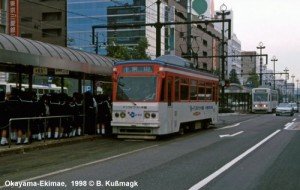
A few yards beyond Club Matador I’m standing on a tree-lined road that is split in two by a narrow, fast-moving river. It’s really very pleasant. That and the trams make the city seem very parochial. It’s like a throwback in time. I’m tempted by the smart-looking tapas bar I see, but that would also involve spending more than I want to. I wander further up the street past a pink-signed soapland advertising some cute local gals, none of whom appear to be teenagers, schoolgirls or partial to clothing. There’s a conveniently placed hotel to the rear. I circle back towards Club Matador and opt to stroll up the road-lined river.

Las Bimbas

Here’s Skippers, obviously trying to look like an English pub – and succeeding until I look at the menu. Pizza, pilaf, chili con carne? I glimpse inside. It looks alright. I’ll check it out another night when I might be in the mood for British pilaf. (I tried; it was closed.) Cafe Gong looks tempting in a dingy kind of way, but I have my walking boots on now and can’t stop. A deluxe darts bar looks OK (they have a Guinness sign outside), as do the modern-looking Agate and Shelter, but I end up outside Club Matador again and I’m hungry. I would really like their chicken and chips – so I order the guacamole plate. It’s barely passable (for 800 yen) and the bimbo next to me insists on nicking some of my doritos. Her (cuter) bimbo friend passes, but smiles in a non-patronising way. (Japanese bimbos are masters in the art of the withering smile; I’m sure they teach it at bimbo school.)
Bimbo 2 works in a dentist’s or is a dentist, or maybe she just likes teeth. Or perhaps she’s offering to clamp her teeth around my …. I really should learn more Japanese. Such faux pas could prove embarrassing. Anyway, it’s Thursday night and the two are out enjoying themselves, which seems to involve trying every cocktail on the menu.
“What’s that?” I inquire of the pink monstrosity in front of B2.
“It’s pink,” she replies.
“OK, but what flavor is it?”
“Errrr…..”
I take a sniff.
She smells nice.
I sniff the drink.
Oh my god.
“It’s strawberry. It’s like a milkshake.”
“It’s got vodka in it,” Ippei, the English-speaking barman tells me.
Ippei is a handsome young chap who looks like he knows the bimbo sisters, or at least wants to undress them. His English isn’t perfect, but he’s very friendly and happy to talk. Unfortunately, he doesn’t have much to say. I tell him I was looking for the Aussie Bar, but was told it had closed down. I had asked three women I was working with in Okayama where the best places in town were, in particular the Aussie Bar. It was closed they said. So I asked them where I could go instead.
“To eat?”
“To drink, you know, a bar.”
“…………….”
Clueless. I’m not sure they even knew there was an east side to the station.
Luckily (a relative term in this context), I met Ippei.
“I’m working there tomorrow night,” he says. “Come along.”
Bimbo 1 has a headache, is whining and has decided to fall asleep in her food. I’d asked her what she does for a living.
“Nothing.”
What do you do all day?
“Sleep.”
What do you do at night?
“Drink.”
“Are you a whore?” I imagined a brave version of me asking her.
“Of course I’m a fucking whore, you idiot. Do you think a normal person would dress like this?” I imagined her reply.
“Where’s the Aussie Bar?” I ask Ippei.
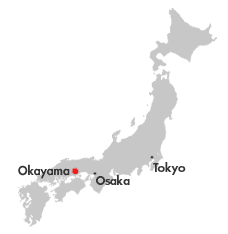
“I’ll draw you a map.”
Nice guy.
Fifteen minutes later he presents me with a map on a small but detailed piece of paper. He’s even colored in the river. If I’d had the time, I think he would have built me a three-dimensional mock-up of the area. It’s a very intricate map for something that only needs a few swift strokes of the pen. It turns out all he had to do was say: Go outside, turn left at the river and walk for three minutes.
 

How to get to Aussie Bar

The bimbos are becoming boring. The foxy barmaid is anything but – but she ignores me. Barman No. 2 grudgingly says hello. He says he’s Mexican. All his buddies speak Spanish. One plonks himself down beside me (I think to avoid sitting next to the black guy a few stools up.) I look at him; he looks at his drink. I look at my drink. I look at him again. He looks at his drink. I look at the barmaid. She looks at his drink. Time to leave.

Lowered expectations

“It’s Saturday night and…” I grab Ippei’s map and go in search of the Aussie Bar, which, of course, is just around the corner from everything else.
I cross the main street that leads from the station to the castle.
Everything goes dark. It was like someone had turned off a light switch. If there was actually anything there, I would call it the sleazy part of town. But it was just gloomy. There’s one place near the main street called the ORZ Bar. Is that it? I didn’t actually check what the Aussie Bar was called. You’d expect Waltzing Matilda or Ned Kelly’s Last Stand or the XXXX Bar or the Where the Bloody Hell Are You Bar. I decide the ORZ Bar isn’t it. Shame, it looks quite decent. As I venture further into the gloom, a dull yellow sign appears.
It says: “Aussie Bar.”
Great name.
I lower my expectations.
But it looks like a bar, a British bar really. Ippei is sitting next to the fridge and offers me a stool. He introduces me to the owner, Jason. Pleasant enough.
I’m hungry.
“What’s on the menu, Ippei?”
Not much, as it turns out. Mexican pilaf, chicken and rice, a dog turd and sausages.
The dog turd sounds tempting.
“What kind of sausages do you have, Jason?”
“Err…”
“Are they Japanese, or English style or German frankfurters, or what?”
“Errr… I don’t know. I think they’re Japanese.”
“Yes, I think they’re frankfurters,” Ippei chips in unhelpfully.
“What flavor is the dog turd?”
I need an alternative to unspecified sausages. Rice. You can’t go wrong with rice.
“What’s the Mexican pilaf like? Has it got beans? Is it hot and spicy?”
“Errr….”
“It’s rice,” Ippei explains. “And Mexican.”
And?
“And maybe a little bit spicy, but it’s good.”
“Can you put a dog turd on it?”
“Sure.”
Mexican it is, then.

The Mexican chef tosses rice from the rice cooker into the pan, sprinkles chopped chilis on top and adds some home-spiced chili beans. In a few minutes of crazed flambé culinary magic, he has conjured up a healthy helping of home-cooked soul food to warm my stomach and my heart…

Ippei takes the plastic bag out of the microwave and cuts it open. The brown contents ooze onto a plate, which Ippei serves to me with his ever-cheery smile.
“Mexican pilaf,” he reminds me. It tastes good, but I was so hungry even my toenails would have tasted good.

Nice but Tim

“Here’s another Englishman,” Jason exclaims. “It’s Tim.”
Why, so it is. Never met him before, and within minutes I’m thinking he’s a complete twat. Might be marginally tolerable when he’s not pissed. Drunk, he comes at me with all barrels blazing.
“Writer? I’m a writer, too.”
“What do you write?”
“Oh, everything. You know…”
Er, nope; haven’t got a clue. No matter, he’ll keep talking.
“Do you know there are three ways from which to examine life? Love, justice and pity. These three define everything in life. Take David Beckham. His love of playing for England. The just decision to drop him. And the pity we have for him. You see; love, justice and pity. It defines everything.”
God, I wish I’d met this guy before I’d had that Mexican pilaf. I sense vomit.
Tim’s faux-yakuza shirt and wicker trilby are too close – not to each other, to me. Not only is he trying to ram his cod philosophy into my brain, he’s also trying to ram it down my throat physically. He goes to hug a guy at the bar. Then he comes back to me and makes to try and hug me. I warn him to back off.
“Tell me more about your philosophy, Tim.”
He rants. He’s still too close. This guy is obviously stir crazy. Small towns can do that to you. Luckily, he goes to the bog and the girl at the bar smiles at me. I move. She’s sitting with a guy who surfs and boxes. She works in Starbucks, and makes it sound like a career. Maybe in Okayama, it is. They’re friendly, although Starbucks girl is constantly looking over my shoulder at the entrance as if she’s seeking salvation from another patron as yet unarrived. Surf dude buys me a beer and asks if he can stay at my house in Chiba. I tell him my wife might not approve. He’s a little too insistent. And I don’t want to buy him a drink.
Jason distracts me by introducing Matt, another Englishman. He’s a middle-aged northerner with unfashionable glasses. Wearing an England shirt. He reminds me of a mad, very highly strung former submariner I used to work with in Saudi Arabia. Too wound up. Too intense. But compared to Tim, he’s almost a relief.
Time for a little relief of my own. Reality returns in the bog (luckily Tim’s left it).
What the fucking hell am I doing in a craphole like this? Aussie Bar? Any Aussie Bar that calls itself Aussie Bar is desperately saying to all sane people: Stay the fuck away!
I get the fuck out.

Eureka! Erikas!

Sunday morning. My last full day in Okayama. Time for a latte to sustain me through the afternoon’s work. It’s shopping day in Japan. Lots of girls; not a lot of fashion. Still, it makes pleasant viewing. A girl in a floral dress comes in, gives me a smile. It’s not the “Why the fuck are you looking at me” smile I usually get; it’s more a “Hello, have a nice day” kind of smile. But a genuine one.
Hot chicks in hot-pants waltz by outside the window. My peripheral vision catches a floral dress. It’s sitting next to me. It’s Erika; she’s a bank person. She’s very attractive. She speaks English.

Metal-tipped tentacles spring from her ears, she slices open the top of my head and removes my brain.

Surprisingly, this isn’t true. Erika is simply an angel sent by Bog in heaven to make me like Okayama. She lives half-an-hour out of town with her family and three dogs. She works in a bank. She likes Starbucks. She’s visited England (London, Oxford, Windsor, Canterbury, Salisbury). She wants to speak English with native speakers. She’s so pleasant I’m tempted to ask her what species she is.
She asks what I’ve done in Okayama. I tell her about the previous night’s visit to the Aussie Bar.
“An Aussie bar. Maybe I should go there.”
“NO NO NO NO NO NO NO NO NO NO!!!!!!!!!!!!!!” I suggest lightly.
Don’t you know anywhere else, I ask.
Not surprisingly, she doesn’t. She gets up at 5 a.m., gets to work before 8 a.m., finishes at 5:30 p.m., goes home, eats with her family, plays with her dogs and goes to sleep. In spite of the fact that she’s met me, she has faith in foreigners. She wants to meet her prince, she says.
“Prince Fred of Chiba?” I inquire.
As much as an angel can do it, she gives me the “fuck off” look.
So many Japanese know so little about the places where they live. I wonder if I know that little about England. Well, certainly I do now, but I’ve been out of the country for 30 years. Nevertheless, I know things. When I go to a new town – in any country – I try to walk around it. Sometimes, I walk for hours and hours. I look for restaurants or bars, nooks and crannies, history and schoolgirls. All the things a tourist needs. All the things a resident needs to know. After a two-hour walk around Okayama, I seemed to know more than all the residents I met there. And that happens all the time. I still know dick, but I know more dick than most residents.
But Erika restores my faith in the people of Okayama. I can’t judge the place on the few barflys I’ve met. She’s wholesome and genuine, not stupid and outgoing in a very demure way. I’m not sure she’ll find her prince in Okayama, but I know a few places she needn’t bother looking in.

Molly volley

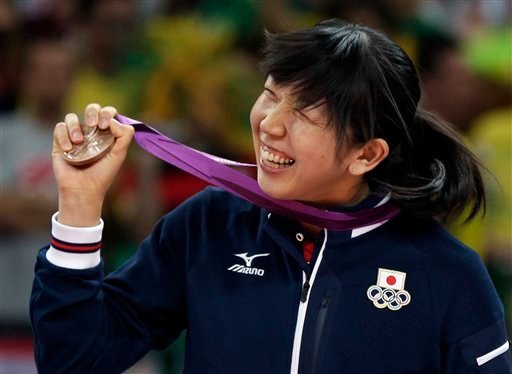
But she wasn’t the only Erika sending out positives vibes from Okayama. Erika Araki is the captain of the Japan volleyball team and she hails from Okayama. On Saturday, she had been massive in helping Japan overcome the unbeaten Poles in the women’s World Grand Prix.
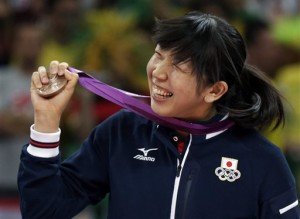


Recovering from an injury, she had come off the bench and put on a hero’s performance in front of her family, friends and fans. In fact, the whole team were awesome. They may not be giants on the international sports stage, but this particular group of players – coached by the tight-lipped, but, I suspect, very fucking good Masayoshi Manabe – is a wonderful advert for Japanese women, Japanese athletes and Japanese potential.
Hopefully, Okayama will be inspired by Erika and her teammates. Maybe all Okayama girls should be called Erika.
More likely, they’ll just be called Okayama Girls.
Don’t want to confuse the guys at Aussie Bar.

Oct 30 2012

Ozzy Osbourne, just a guy who likes to make people smile


By Fred Varcoe

“I’m not the Antichrist, I’m not the Iron Man, I’m not the kind of person you really think I am . . . I try to entertain you the best I can, I wish I’d walked before I ran,” Ozzy Osbourne sings in “Gets Me Through,” the opening track on his new album, “Down to Earth.” It is at once a touching thank-you to his hordes of faithful fans and a dismissive fuck-you to those who have tried to condemn him or who have misrepresented him.

“It amazes me that people see me like this,” the Englishman complained in a weekend phone interview from his home in Beverly Hills. “I don’t go out very often; I watch TV a lot and stay home, so how do they know I worship the fucking devil or whatever? They don’t see me swinging off the rafters off my house or anything.”

Of course, any man who is prepared to bite the heads off live doves (in a meeting of CBS record executives) and bats (on stage) is hardly likely to get a fair shake when it comes to images in the media. “I thought it was a rubber bat,” Ozzy once said, somewhat disingenuously.

Other manifestations of his past drink and drug excesses didn’t help either. After polishing off four bottles of vodka one afternoon in September 1989, Ozzy told his wife, Sharon, “We’ve decided that you’ve got to go.” He then proceeded to strangle her. She managed to hit the security button in their home and the police got there before Ozzy could do any more damage to her – or himself.

He was charged with attempted murder, but after a drying out spell and an enforced separation from his family for three months, the couple got back together and stayed together. They’ve now been together nearly 20 years and Ozzy’s past indulgences – at least the drugs and drink part – have given way to exercise, a healthy diet and a family-centered life.


Ozzy and Sharon


The MTV man

MTV will be offering an inside look at the Osbournes – Ozzy, Sharon, daughters Kelly and Aimee and son Jack – in a 13-part, fly-on-the-wall documentary series to be broadcast in the United States. Anyone who saw the precursor to the series a few years back, when Ozzy also allowed TV cameras into his home, will recognize that the king of heavy metal is anything but the monster he’s sometimes made out to be.

That’s not to say, though, that life chez Oz resembles “The Waltons.” The original documentary was more like “Absolutely Fabulous,” with Ozzy his usual cartoon self – a wealthy, foul-mouthed, heavily tattooed, uncompromising vision of horror for Middle America – and the kids on hand to keep the household from going out of control.

Picture this: Sharon has hired a chef to make breakfast for Ozzy. Eggs Benedict is not even in Ozzy’s vocabulary, let alone on his list of potential breakfast items.

“Why do we need a fucking chef to cook me breakfast?” he complains. “All I want is fucking eggs and bacon. We don’t need a fucking chef to do that.” Or words to that effect.

“Don’t swear, Daddy,” the kids tell him.

No one who has seen these images of Ozzy will mistake him for an accountant; they may, however, be confused by the sight of Ozzy under the thumb of his wife (who, as his manager and the daughter of legendary British promoter Don Arden, carries her own fearsome reputation) and children, not to mention the infamous photos from the past, of the out-of-control, drugged-up, boozing rock animal who kills wildlife on stage. The images just don’t seem to go together.

So who – or what – is the real Ozzy?

“It’s somewhere in between,” Ozzy admits. “I’m not a Satanist; I’m just a guy who likes to make people smile. Rock ‘n’ roll is the best thing that’s ever happened to me in my life because I can let people have fun.”

And the cartoon monster image?

“Well, it’s better than being a terrorist, isn’t it?” he suggests.


Ozzy hopes the MTV series is going to be shown in Japan.

“It would be really interesting to see a translation of what I’m saying and having me dubbed in Japanese,” he said. He would certainly prefer that to hearing himself in English.

“I cringe when I hear myself talking normally,” he says. “I hate the sound of my speaking voice. I sound like a mutant.” (Ozzy’s slurred Birmingham drawl prompted one American journalist to ask if the MTV series would be subtitled so people could understand what he’s saying – at which point, Sharon reportedly shouted: “Who said that?! . . . Stand up, you arsehole!”).

‘Japan’s been good to me’

If not on television, Japanese fans will have a chance to see the new lean and healthy Ozzy in the coming weeks when he tours Japan in support of “Down to Earth.” They can also be content in the knowledge that he’s likely to be recording his upcoming concert at the Budokan for a live album.

“I haven’t been there for a while, but the Japanese have always been good to me,” Ozzy says. “I’ve got a good fan base over there. I like the Japanese people, and I’ve always had a good time there.”

Though his bad-man image has proven appealing to teens all over the world, the reality is that he can only sustain his success as long as he is still producing the goods on record. And even at the age of 53, he is still producing awesome – and contemporary – rock ‘n’ roll. He admits that he’s able to do this with a little help from his friends.

“I work with teams,” he explains. “On ‘Dreamer’ [track 3 on ‘Down to Earth’], I worked with Mick Jones from Foreigner and Marty Freed. The melody line just came from nowhere. I’m not usually a melody maker, but ‘Dreamer’ is the coolest melody I’ve ever written.” In fact, it’s probably the closest he’s come to writing pure pop, which may not please all his fans.


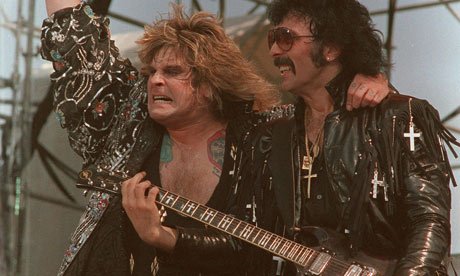
Ozzy playing with Black Sabbath guitarist Tony Iommi


Ironically, Ozzy supposedly left Black Sabbath in 1978 – when it was one of the biggest acts in the world – because he was unwilling to follow guitarist Tony Iommi into a more melodic strain of heavy metal. Since then, Ozzy the solo artist – still one of the biggest rock acts in the world (he’s sold over 40 million albums to date) – has been able to indulge in his love for The Beatles (“When I first heard ‘She Loves You,’ I couldn’t fucking believe it. They got me interested in music.”) and has come up with some of his own sweet melodies.

Of course, Ozzy’s bread and butter is still very much on the dark side. On “Down to Earth,” longtime sidekick Zakk Wylde cranks out monstrous guitar riffs that perfectly complement the air of menace and scary lyrics that are Ozzy’s trademark.

Despite the “Sabbath” reunion album, which he did a couple of years back with the original members of Black Sabbath (“It’s like visiting your relatives,” he says of their relationship), Ozzy’s got too much to look forward to to spend his time looking back. And while he was shocked over the recent death of George Harrison, he doesn’t lose any sleep thinking about his own demise.

A man alive

“It’s just one of those things that happens to all of us,” he says matter-of-factly. “I don’t think, ‘I’m dying, I’m dying, I’m dying’ all day, because while I’m thinking about dying, then I’m not living.”

Ozzy is still very much alive and is working like a madman: Besides the MTV series and the upcoming Far East tour, he and his wife also organize the Ozzfest, a heavy metal festival that tours mainly America and Europe. (“Jack chooses most of the bands now,” Ozzy admits.)

“We’ve been trying to take the Ozzfest to Japan, but the problem is the logistics are just ridiculous – the costs outweigh the profits,” Ozzy explains. “With all the equipment, the stage and the bands, it’s just too huge to do.”

With all these projects going, how long can Ozzy keep it up?

“I was asked if I would still be doing this at 35; I said yeah. At 45? Yeah. At 55? Well, I’m 53 now, so yeah. And at 65? Well, maybe, yeah – unless the plane goes down on Tuesday,” Ozzy jokes, adding: “There’s no rule saying you can’t rock ‘n’ roll at 60.

“If there’s an audience out there and they want to hear me, then it’s OK. If my fans fall by the wayside, if I’m playing to 25 people in The Whiskey on Sunset and I’m not enjoying it any more, then I won’t do it anymore.

“But I’m 53 and I’m still going. I’m the luckiest guy in the world and people still want to hear me, so it’s great.”


Oct 30 2012

Stomu Yamash’ta and the sound of Zen

By Fred Varcoe

Stomu Yamashi’ta progressed from being a teenage musical prodigy in the 1960s to arguably the most famous Japanese person on the planet a decade later. Then he gave it all up and went to meditate in a Kyoto monastery for three years. For three decades, the musician that Time magazine once referred to as “the man who has changed the image of percussion” has largely stayed in Kyoto refining his art, refining his life and living in a Zen-like world of sounds and music.
This is not rock ’n’ roll. There’s no record deal, no tour, no merchandise, no groupies. There’s no timeline. Yamash’ta is a point in infinity, a musical shaman, a giver and receiver of life and music.
His most recent tangible product is a double DVD, “Walking on Sound,” in which he collaborates with Icelandic counter-tenor Sverrir Gudjonsson and which is referred to as a “Zen and Viking opera.” The first part is “The Void,” which brings together Yamash’ta’s percussion, Gudjonsson’s singing and vocalising, Syrian soprano Noma, the Irish flute of Dominique Bertrand, the shakuhachi of Genzan Miyoshi and the chanting of four Buddhist monks. The second part is “The Sound of Zen,” largely consisting of Buddhist chants accompanied by Yamash’ta’s percussion, Miyoshi’s shakuhachi and the yokobue of Michiko Akao. Both are live performances recorded at the Saint-Eustache Church in Paris. The other DVD is a documentary of how the performance came together.
At a young age, Yamash’ta’s reputation was established so rapidly that he was in demand the world over from the greatest musicians of his age. His entrée was classical music – he played as a guest with the Kyoto and Osaka Philharmonic Orchestras at the age of 14 – but his musical mind quickly absorbed everything around it, be it jazz, avant garde, rock or the abstract. He defined the role of the solo percussionist and started to improvise and compose, contributing to the soundtracks of movies such as “The Tale of Zatoichi,” “The Man Who Fell to Earth” and “The Devils.” He moved through avant garde to jazz before establishing the Red Buddha Theatre Company to showcase his idea of sounds and vision.
His most visible work in the rock world came in 1976 when he collaborated on the Go project with huge stars such as Steve Winwood (Traffic), Phil Manzanera (Roxy Music), Mike Shrieve (Santana), Klaus Schulze (Can) and Al Di Meola (Return to Forever). Yamash’ta had transformed himself from a classical teenage prodigy into a global rock star.

Giving it all up
Then he gave it all up, returned to Kyoto and stayed at a monastery for three years.
“I came back from Europe when I was at my peak, and many people wondered why I quit and came back to a Buddhist temple, suspending – almost giving up – my career,” Yamash’ta recalls. “I thought I should give up to become zero again, to get hungry again.
“I had to be honest to myself, what I felt. I was too lucky to be able to taste the best of everything, including classical music, contemporary music, jazz-rock fusion. I was able to collaborate with the best. This was a kind of fate and after tasting this kind of pure fate, I had to go back to something totally different, which you could call ‘religion,’ although I don’t like to use that word because it creates misunderstandings. I was glad because I had this almost desperate hunger which made me go to the temple. My father was associated with one of the most famous temples in Kyoto – Toji – and by this luck I found something that I had never experienced in my lifetime before. So it was a really good approach for me.”
In short, Yamash’ta wanted out of the “system.”
“When you become part of a system, at some point we need to make a transition to go to a different level,” Yamash’ta explains. “In today’s reality, we are facing this kind of transition.”
Zen uses meditation as the means to enlightenment and Yamash’ta took a similar path in the temple, which he refers to as “a spiritual environment of humility and innocence.”
“It gave me enormous joy and some kind of answer,” he says. “Suddenly, I could see myself very clearly.”


As if by fate, he learned of a stone with amazing sonic properties that was found in the mountains of Kagawa Prefecture on Shikoku Island.
“When I met the Sanukite stones, I felt like my life was almost complete,” he says. “Speaking personally, I got my answer to life so I feel I can end it, to depart to a different world. But of course, I am still living here, existing, and the last 25 or 30 years were for me more personal. And this personal thing was wonderful – to be able to spend this time as an artist. I didn’t have to concern myself with social benefit.”
But Yamash’ta doesn’t reject society. Far from it. He is more outgoing than some might think. He may think a lot and meditate a lot, but he laughs a lot and enjoys good company. It’s easy to see that talking – communicating – puts a sparkle in his eye.
“Now, I feel like maybe I’m at my final stage, so from now it’s more like my mission – or whatever I can do – to communicate, to make some kind of function to create a better beauty, and this beauty can lead to a new ‘garden,’ ” he says.

The life and sounds of stone
His musical endeavours over the last quarter of a century have revolved around bringing the Sanukite stones to life. Anyone can bang a drum, but breathing life into inanimate objects takes a belief that the objects really do possess life and power. Yamash’ta caresses his stones and communicates with his stones as if they are alive. For him, they are. They possess life – in their unique sounds and their 20-million-year history. Yamash’ta the percussionist is not a member of a band or orchestra; he does not beat time to someone else’s rhythm. He does not beat time, period. He is a channeler of sounds. He discovers the sounds of the stones. They are not his sounds; they are the stones’ sounds.
“The Void” is a journey through history, through life, and a message of peace and hope for the future. Yamash’ta worries about the younger generation and wishes they could find the awakening that he has experienced over the last three decades.
“Compared to our age, young people have a more established education,” he explains. “They have more information, but being young, the tragedy is they have not had enough experiences that could create a new dimension, and to face a new consciousness; you need knowledge to overcome. You have to filter knowledge through experience. And maybe this is one reason why young people are becoming so inward-looking today.
“I was glad about Steve Jobs’ message: ‘Stay hungry, stay foolish.’ That is very Zen. To understand foolishness is a very, very deep message. I think in the ’60s and ’70s we had a very good kind of foolishness and this opened a new door, a desire to taste humanity. When you hear some of today’s songs, it’s so obvious they have not had good experience. I’m sorry to say they are just singing social information. If they allowed themselves to be more ‘foolish,’ they could find a better approach to create a new artistic scene with coexistence.”
Yamash’ta is no fool, but he has the spirit of a fool – the fool of Shakespearean literature, a fool that has more wisdom than those around him, but which is not always obvious. As in meditation, sometimes you have to close your eyes to see the light.


Oct 16 2012

Japan, Korea and the Gangnam void

By Fred Varcoe

There’s something distinctly odd about Japan’s cultural relationship with South Korea. Of course, with around a million Koreans or people of Korean lineage living in Japan (the Koreans would claim around 120 million, but that’s a different story), it should be no surprise that there is a strong link between the two. Head to the area between Shin Okubo/Hyakunin-cho and Kabukicho in Shinjuku Ward and you will be overwhelmed by Koreana. You can’t move for Korean shops, Korean restaurants, Korean pop culture and Korean people.
When I lived in that area between 1987 and 1992, there was nothing there. And I mean nothing. At that time, Japanese culture was effectively banned in South Korea – no pop music, no films, nothing – and it seemed like it was a two-way affair. Japan, too, wasn’t exactly going out of its way to understand the culture of its closest neighbour (despite the presence of plenty of Korean hostesses where I lived).
Following the easing of restrictions on Japanese culture (which was, of course, always available in the bootleg markets of Seoul and other cities), the two countries slowly opened up to each other. Japanese bands were already becoming popular in Korea, while “Winter Sonata” heralded a tsunami of dreadful dramas into Japan. Koreans have become big stars in Japan, while Japanese are free to exploit the smaller Korean market.
Japanese pop fans have realised that Korean bands and stars can out-sing and out-dance the domestic versions (or at least equal the many “Japanese” stars of Korean descent). Other Asian countries have followed suit. The Koreans are everywhere.
PSY is everywhere.


Who’s he?

The pudgy 34-year-old has taken the world by storm with his quirky dance hit “Gangnam Style,” racking up half a billion views on YouTube and soaring to the top of the charts in the U.K., the United States and a host of other countries. He’s now a worldwide star.
A worldwide star that most people haven’t heard of in Japan.
The anomaly doesn’t make sense. Japan has been mainlining Korean culture for a decade now and doesn’t seem to be able to kick the habit. However, a recent reawakening of the Dokdo/Takeshima island dispute has put the right-wing lunatics back on the street and TV stations have been put under pressure to lay off Korean culture. Even Fuji TV, known as a right-wing channel, was apparently “warned” to be less accommodating to Korean programs and to show more Japanese crap.
Politicians from both countries have fanned the flames in irresponsible ways. South Korean President Lee Myung-Bak’s ill-advised trip to the islands sparked the latest round of insults and many Japanese have been happy to return the insults with their warped version of history. The Koreans are in possession of the islands and aren’t going to give them up. The Japanese have a weak claim to them and aren’t going to do anything to try and reclaim them, apart from fruitless gestures and ineffective legal measures. So the catcalling is just that.
But it may be that there is some discrimination against PSY for being the world’s most visible Korean. Some people claim not to like “Gangnam Style,” but not many. And it should be right up Japan’s alley – great tune, good beat, stupid dance, funny and fun. What’s not to like?

Some say PSY hasn’t promoted the song in Japan. HELLO!!!?! Half a billion people have seen it on YouTube. It shouldn’t need promoting. It’s a worldwide phenomenon; you’d think that any media organisation must report on it. How could they ignore it? But I haven’t seen it mentioned on Japanese TV (which, admittedly, I try to avoid) and when I polled 50 university students, only one of them knew it – or admitted to knowing it.
PSY reportedly was planning on heading to Japan at the end of September and even planning to do a special Japan version of his song (“Roppongi Style”), but the trip didn’t come off. No reason has been given. One theory is that he was concentrating on doing a deal with Justin Bieber’s management in the U.S. But one factor that may be preventing PSY from coming here is a drugs bust in South Korea in 2001. He was busted for smoking marijuana. Apparently, the usual drill for South Korean parents in such situations is to head down to the cop shop, fall to their knees and beg forgiveness for their child. PSY’s parents apparently just shrugged and said, “Yep, that sounds like our son.”
PSY also had trouble with his compulsory military service. According to Wikipedia:

“PSY served his mandatory military service as a technician in a venture firm from 2003 to 2005. After evidence came to light that revealed that PSY hadn’t properly carried out his duty during his service as a technician, he was re-drafted to serve as a soldier in the ROK Army in August 2007. After being discharged in the summer of 2009, PSY said he had learned a lot through this experience. He said he also felt the weight of his responsibility to his wife and twin daughters, born two months before he headed off to the ROK Army boot camp.”

PSY has been labelled “K-Pop” but he’s not really part of the K-Pop setup. He’s not pretty, he’s not slim, he doesn’t look like he’s been surgically modified and he’s not young – generally prerequisites for success in Japan (and Korea). But he does have talent and has been successful over the years. More to the point, he’s funny and an iconoclast. He gets irony, which the Japanese haven’t managed to invent yet. Maybe the Japanese just don’t get him.


Apkujong (no) style

“Gangnam Style” parodies the young, rich and stupid who flash their brand names in the meat markets of Seoul. PSY should know; he’s one of them. Well, he’s a rich, Gangnam boy. Actually, Gangnam is a large area south of the Han River in Seoul. The ground zero for the rich dicks PSY parodies is Apkujong. Here’s what I wrote about Apkujong for The Japan Times 10 years ago:
“Apkujong
Part of the Gangnam area, but merits an entry in its own right as it’s the trendiest part of town. Or, to put it in the vernacular, it’s full of tossers with more money than taste and posers with no taste at all. Apkujong is a little bit Ginza, a little bit Regent’s Street, a little bit Beverly Hills. … While you will still get your hamburger joints (McDonald’s, Kentucky, Hard Rock Cafe, etc.) and family restaurants (Bennigans, Thank God It’s Friday), you can find several classy eating establishments, bars and cafes. Of course, there’s nothing more irritating than seeing a bunch of clueless dorks with cash pretending they’re better than everyone else, but if you can ignore the cream of South Korea’s jerks, you can find some decent food in the area. Apkujong is BIG on fashion designers. You have been warned.”


According to an AP report: “ ‘The song explores South Koreans’ ‘love-hate relationship with Gangnam,’ said Baak Eun-seok, a pop music critic. The rest of South Korea sees Gangnam residents as everything PSY isn’t, he said: good-looking because of plastic surgery, stylish because they can splurge on luxury goods, slim thanks to yoga and personal trainers.
‘PSY looks like a country bumpkin. He’s a far cry from the so-called Gangnam Style,’ Baak said. ‘He’s parodying himself.’ ”

Well, good luck to him. PSY obviously can do without Japan. Japan, on the other hand, desperately needs someone like PSY who can recognize and parody the buffoonery in Japanese society and politics and entertainment. We don’t need no Beat Takeshi, as Pink Floyd might have said. It’s another brick in the wall that Japan loves to live behind.
The world’s gain is Japan’s loss.


English Translation of “Gangnam Style” (from the web):

Oppa is Gangnam style
Gangnam style
A girl who is warm and human during the day
A classy girl who know how to enjoy the freedom of a cup of coffee
A girl whose heart gets hotter when night comes
A girl with that kind of twist
I’m a guy
A guy who is as warm as you during the day
A guy who one-shots his coffee before it even cools down
A guy whose heart bursts when night comes
That kind of guy
Beautiful, loveable
Yes you, hey, yes you, hey
Beautiful, loveable
Yes you, hey, yes you, hey
Now let’s go until the end
Oppa is Gangnam style, Gangnam style
Oppa is Gangnam style
Eh, Sexy Lady, Oppa is Gangnam style
Eh, Sexy Lady oh oh oh oh
A girl who looks quiet but plays when she plays
A girl who puts her hair down when the right time comes
A girl who covers herself but is more sexy than a girl who bares it all
A sensible girl like that
I’m a guy
A guy who seems calm but plays when he plays
A guy who goes completely crazy when the right time comes
A guy who has bulging ideas rather than muscles
That kind of guy
Beautiful, loveable
Yes you, hey, yes you, hey
Beautiful, loveable
Yes you, hey, yes you, hey
Now let’s go until the end
Oppa is Gangnam style, Gangnam style
Oppa is Gangnam style
Eh, Sexy Lady, Oppa is Gangnam style
Eh, Sexy Lady oh oh oh oh
On top of the running man is the flying man, baby baby
I’m a man who knows a thing or two
On top of the running man is the flying man, baby baby
I’m a man who knows a thing or two
You know what I’m saying
Oppa is Gangnam style
Eh, Sexy Lady, Oppa is Gangnam style
Eh, Sexy Lady oh oh oh oh


Oct 8 2012

Pot, kettle, black c***

Terry, Cole and a Bunch of Twats

By Fred Varcoe


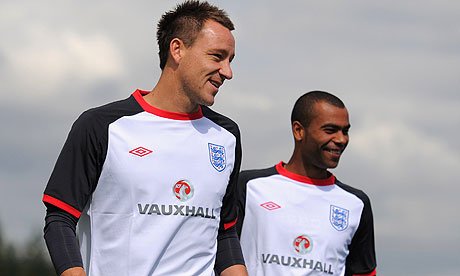
Should John Terry be fired by Chelsea, as demanded by The Guardian?
Is John Terry guilty? Is Ashley Cole a liar? It’s seems to be a popular thing to say. It seems to be a “right-on” thing to say. It seems to be the thing that writers in the U.K. want to say over and over again. U.K. journos love bandwagons; they make journos popular without the need to resort to actual thinking. Or, indeed, facts.
So what’s happened? An “independent” panel appointed by the F.A. has found Terry guilty of making a racist statement, while at the same time saying he’s not a racist.
The same panel has effectively called Ashley Cole a liar for “amending” (“evolving”?) his evidence.
An English court found Terry not guilty. The court requires evidence to prove the case. The F.A.’s inquiry does not require evidence that proves a case. The independent panel only has to think that Terry might have done what he was accused of to find him guilty of the offence. And that’s what they did.

Variations on a cunt

The F.A. say Terry called Anton Ferdinand a “fucking black cunt … fucking knobhead,” while Terry maintains that he said something along the lines of “Did you accuse me of calling you a ‘fucking black cunt’ … fucking knobhead.”
Apparently Ferdinand had insulted Terry in relation to Terry’s shagging of Wayne Bridge’s wife. The F.A. hasn’t taken any action against Ferdinand on this. Apparently this kind of emotional provocation is OK with them.
And apparently it would have been OK if Terry had just said “fucking cunt” or “fucking human cunt” or just “cunt.” And it didn’t matter that Ferdinand didn’t hear the insult (apparently they were 19 meters apart at a very noisy ground).
The only thing that matters, apparently, is that three “independent” people think Terry used “black” as an insult. The ruling of the British court apparently doesn’t matter; the British justice system is obviously inferior to the F.A.’s and the F.A.’s panel can evaluate evidence better than an English court. And the F.A.’s panel doesn’t need to prove anything. Yes, that’s the kind of justice we journalists need. It makes a much better story.
Anton Ferdinand accusing Terry of shagging his teammate’s wife is not a story. Because the F.A. approve of that (OK, don’t disapprove of it). Terry reacting on the spur of the moment under provocation should result in his career being destroyed, according to the Guardian. One assumes that the Guardian thinks that everyone who reacts in an insulting verbal manner when provoked should be sacked, even if there is no evidence that proves the verbal insult was actually a verbal insult.

Racism but not a racist

Nobody seems to think that Terry is a racist, but in the heat of intense competition and under severe provocation he may have used a race-based slur against his provoker. If he was guilty, it was most likely an emotional outburst with racial overtones rather than a racial outburst (which would by logical extension be aimed at all black people, including Terry’s teammate and witness Ashley Cole). If this can be proved he should be punished on this basis, but who among us hasn’t said hurtful words in anger at someone they like/love/respect/admire?
Now Cole is being dragged across the, er, coals because he was offended by the F.A. panel insinuating he was a liar. He called the F.A. a “bunch of twats.” He’s been punished for that (even though it hasn’t been disproved and a three-man independent panel I convened believe it to be true). Specifically, he has been accused of enhancing his evidence to support Terry. Again, there’s no proof (yet).
So, Terry has been punished for something that may have occurred but hasn’t been proved. Cole has been punished for saying something that is true (and, let’s face it, has been proved a thousand times) and may be punished again for something that may or may not have cleared Terry but which hasn’t been proven.
For Terry, three judgments can be made here:

  1. Terry used the phrase because he’s a racist;
  2. Terry used the phrase on the spur of the moment because Ferdinand insulted him;
  3. Terry used the phrase as he claims, i.e., that he wanted to check what Ferdinand thought he said.

For the F.A.:
If it’s 1, then the F.A. should throw the book at him. But not even the F.A.’s Spanish Inquisition believe it’s 1.
If it’s 2, as captain of Chelsea and as a supposed “role model,” perhaps the punishment fits the crime (although when people cripple footballers with fouls, it’s the same punishment and that doesn’t fit the crime).
If it’s 3, it’s not really an issue.

 
For Terry:
If it’s 1, he would be better off taking the current punishment (a four-game ban) and getting on with his life and career and continuing to hide his racism;
If it’s 2, then Terry should man-up and say he used the phrase under extreme provocation and is sorry to all concerned and accept the punishment;
If it’s 3, he has to fight because then the F.A. is in the wrong. Perhaps Terry should have the right to ask that the F.A. panel be examined for bringing about a wrongful judgment and punishing him on unproven grounds, so bringing the game into disrepute.

 
There are two more disturbing aspects to this case.
First, the F.A. has a double-jeopardy clause in its statutes that basically says the F.A. should follow the rulings of the courts. Obviously they haven’t done that in this case. They have been very keen to find Terry guilty (apparently the conviction rate for the F.A. is the same as that of most police states), so they’ve ignored their own rules.
Secondly, Rio Ferdinand, Anton’s brother, referred to Cole as a “choc ice,” i.e., black on the outside, white on the inside. Surely this is a far more serious case of racism than that of Terry’s. It would be like me calling the F.A. or Guardian readers “nigger lovers” for their actions. Yet Rio Ferdinand was only fined £45,000 and not banned.
Should this incident be as big as it’s been blown up to be? It merits attention in the media, but it also deserves some perspective. I hope Terry comes out with a statement that clarifies everything. NO ONE has come out of this looking good and perhaps all the parties should reflect on that.

“We’re whiter than white.”

****
Addendum

I found this on the web and I post it without comment:

10 fatal flaws in the FA disciplinary panel’s ruling on John Terry.

It runs to 63 pages, and is the FA’s justification of its findings. But the panel’s written ruling is a flawed document containing errors and inconsistencies.
1. It states as fact Terry and Ashley Cole met Anton Ferdinand “approximately one hour after the match ended.” Documentary evidence in court proved the team had left by then.
2. There is reference to “Mr Ferdinand’s wife.” He is unmarried.
3. There is no adequate explanation of why Terry was charged under FA rules while Ferdinand, who admitted having breached them, wasn’t.
4. The FA’s burden of proof required reference to the seriousness of the accusations. It is perverse a matter deemed by the criminal justice system to require a “beyond reasonable doubt” yardstick, be judged upon using anything but that.
5. In reasoning on the FA’s rule 6.18 (on the primacy of findings in previous tribunals), the panel goes on a meandering run across the face of the defence, attempting to pick-out the one thread-needle route by which they might reach their intended target. This is not only bad law, it is also an irrational conclusion setting a bizarre precedent.
6. The panel takes the view that because Ferdinand wasn’t cross-examined during the FA hearing, all evidence was accepted unchallenged, a position ignoring cross-examination of Ferdinand in court.
7. The panel emphasises Terry’s use of profanities to infer malice. These are the same words three professional footballers told the criminal court were a part of the general punctuation of speech within Premier League matches.
8. The panel’s belief an innocent Terry would confront Ferdinand at full time, rather than applaud his own fans, misapprehends the character he has displayed over the last 14 years.
9. A section headed “the Barcelona evidence” compares Terry’s initial reported denial of kneeing Alexis Sanchez in Camp Nou, with his latter admission. The panel takes certain inferences from this, despite having been unable to prove the existence of the initial denial. Indeed, having listened back to interviews from that night, I cannot find any evidence of an initial denial.
10. The panel sets stall by the “evolution” of Cole’s evidence. It is normal for witness statements in criminal proceedings to evolve in this way. Changes are to be expected given Cole’s evidence was based on notes of the FA’s investigating team, and not a tape recording.

Taken together these flaws demonstrate that the FA panel was both slapdash and irrational in its approach to this case.


Oct 6 2012

Dealing with Death


By Fred Varcoe

I went to my first funeral when I was 38. It was my father’s. I hadn’t had to deal with death up to that point – and I haven’t had to deal with it much since then.
I’ve paid my respects a couple of times in Japan and South Korea, but I wasn’t particularly close to the people involved, or even knew them at all in some cases. Death was distant; it was abstract. I never felt involved. My recent trip to South Korea to take part in my father-in-law’s funeral brought death back into my life.
There have been a few deaths sort of near me – all my grandparents. But they, too, were distant. I only met my grandparents once a year at best; I didn’t know them so well. I was 8 years old when my mother’s mother died (at 58) and vaguely remember going to say goodbye to her as she lay dying at home. Her husband died 10 years later, slightly out of his mind, while my father’s mother succumbed to cancer around the same time. I hadn’t seen either of them for ages. They lived far away, I was a teen at boarding school and nobody in my family really seemed to make an effort to meet up.
But at 23, with one grandparent left, I made a trek across London to see my remaining grandfather. He was 86, and we went down the pub for some gin and fags. He was good company, alert, funny and as down-to-earth as most Cockneys. He drank pink gin – strong pink gin – and we talked about trivial things. He died a few weeks later. I don’t know how; I don’t know what of. I like to think he had a pink gin in one hand and a Woodbine in the other. But having seen him so recently, I felt connected. I wish I had been more connected to all my grandparents. They were a diverse bunch and had so much to offer.
But it was too late.

The day the music died

Death continued to pass me by. Working in Saudi Arabia in the early ’80s, a couple of colleagues died young: one through an ill-judged experiment with nitrous-oxide, the other – a promiscuous homosexual –from a mysterious disease. Life went on.

One death while I was there did affect me. In December 1980, I bought the Arab News in downtown Taif and took it home. As I entered my bedroom, I glanced at the front page; John Lennon had been assassinated. I was stunned. Perhaps I was more shocked by the fact that I took it personally. It sounds trite, but it was like a part of me had died that day. But it was true. I had grown up with The Beatles. I had bought Please Please Me at the age of 7. I even went to see the movie Help! with my paternal grandmother, another down-to-earth Londoner. The Beatles wrote the soundtrack to so many young lives. We were all emotionally involved.
Fast-forward 22 years to another musician who helped write the soundtrack to my life. Warren was an acquaintance who became a great friend. Like his hero Ray Davies of The Kinks, Warren wrote stories into music – great English pop songs. I used to visit him in Holland when he lived there in the early ’80s. Holland buzzed, and we had a lot of fun. So much fun, it dominated our conversations for the next 20 years. Warren had two Top 10 hits in the U.K. with Bucks Fizz and five minor successes in Japan (I was his agent). He was always first on my list of people to see when I went to the U.K., but with limited time on visits home, I didn’t always see him. At 55, he went to sleep one night and didn’t wake up.


Warren on stage in Holland (with ex-Gruppo Sportivo bassist Eric Wehrmeyer)


It was like being robbed of my memories. Talking about our rock ‘n’ roll days in Holland kept those days alive, kept us young, kept us alive. Is this what happens? Your friends die and bits of your life just drop off with them? We hadn’t finished reminiscing; that part of our lives still felt so close. Is it now?

A week to the day after Warren’s death, I became a father. Suddenly, life had new meaning. My life. But now I realize the enormity of what I’ve done and nothing horrifies me more than to think that I might not be around to help my daughter grow up. I hope I’m wrong, but I don’t expect to live to an old age.


Goodbye, Grandad

My Korean father-in-law didn’t have that problem. One of his daughters died young in a car accident, but he had six reserves plus a son. There was a lot of life in the Lee family. A week after his death, there still is.
But saying goodbye to this man – as dignified and well-grounded as my paternal grandfather, who died at exactly the same age, 86 – was a mixture of the grand and the grotesque. And for the first time since I attended my father’s funeral, I was a participant.
With my father’s death, the remoteness was still there. My father died while I was in Japan and I’d been living overseas for 14 years. It took me two days to get home. I didn’t have to deal with the everyday stuff of death. I got home and the funeral was arranged. I saw no dead body. I didn’t feel involved. My mother, brother and sister had to deal with everything; I just had to fly home. On the morning of the funeral, I played golf. Did I appear cynical? I hope not. Golf clears the head and my head needed clearing. I was hiding behind an emotional wall. It wasn’t going to get to me yet. To get to the crematorium, I drove my rental car. I didn’t want to be part of a procession. I was almost in denial as to all of this being real.
But then we were in the crematorium chapel with my father’s coffin on the rollers ready for his final journey to the incinerator. It all came home to me. This was my life. Death was suddenly real. The priest was talking about my father. After a short service, a curtain shielded the coffin as it rolled toward the burners. A door closed. Goodbye, Dad.
And then we were out in the sunshine, drying our tears, saying goodbye to the living, driving home. What do we do now?
Party, of course. Good food, a lot of Champagne and we were living life again. Perhaps it was too easy, too quick. The Koreans have to work a lot harder for their closure.

The long goodbye
My wife’s father died at around 4 a.m. on a Monday morning. I managed to get my wife on a plane to Busan at 2 p.m. on the same day and she was in Daegu by 6. By then, her family were several hours into the ceremonials. They had delayed dressing the body – in front of the family – until she arrived. I’m not sorry I missed it. Curiously, the first things her parents had shown me the first time I went to their house were the clothes they would be dressed in after they were dead. I was under the impression that I would have to help dress the body. This wasn’t the case, partly because I was traveling a day behind my wife, but mainly because the mortuary staff did that. The wife told me it was done very well and with great class. “My father looked very dignified,” she said.
Due to work obligations, I arrived 24 hours behind my wife. I figured that by the time I arrived in the early evening the whole family would soon out of mourning mode and into the food and alcohol.
Wrong!
I was hustled into the mourning area in the basement of a small hospital to pay my respects before the altar that had been set up. You could barely move for flowers.


I was soon on my knees.
“You have to do two and a half bows,” my brother-in-law informed me.
Well, what’s that? OK, two on my knees, head touching the floor; I get that. But a half bow? Do I get half up and get down again? Or do I get all the way up and bow halfway. I’ll opt for B, Bob. Eerrrck! Wrong! But no big deal.
I was handed a black suit to replace the black suit I was wearing (“It’ll get dirty,” I was told.) and given an oversized white shirt and black tie, identical to the suits and shirts and ties worn by the other five sons-in-law and my wife’s brother. I had to wear a strange tall yellow hat and armband made of linen, which had a single black line running around it. The brother’s had two black lines. South Korea is a Confucianist country; everyone has their rank. I felt like the corporal of death.


No, really, it suits you…

In the small altar area, there were seven cushions lined up on each side. Not quite seven brides for seven brothers; there were seven brides for the lone brother and six brothers-in-law. Position was determined by age. I was married to daughter No. 4, so I was fifth in line (the brother was first, of course). The women were lined up in similar order opposite their husbands.
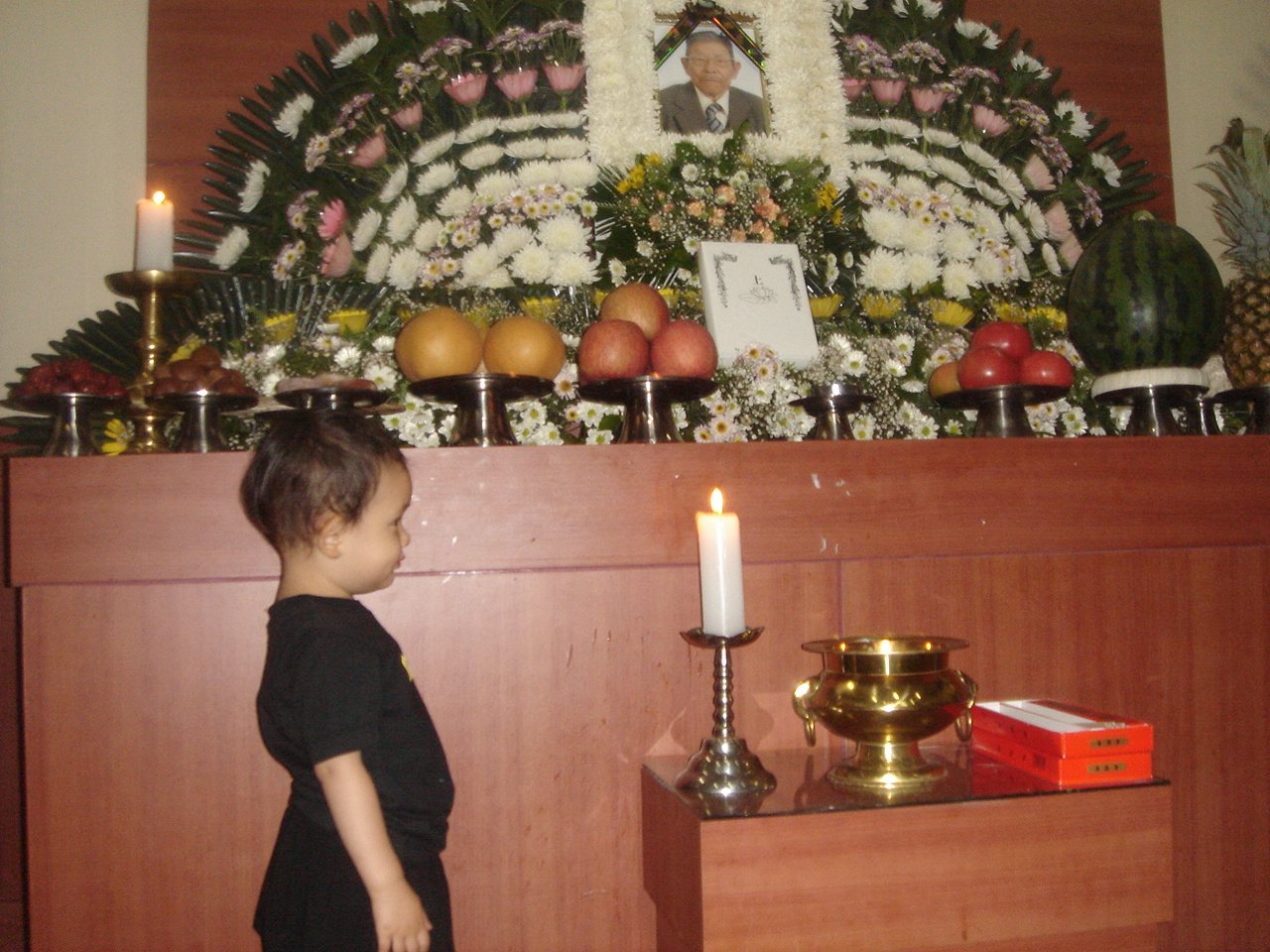
The altar had a smallish picture of the deceased and lots of food and flowers. The primary floral tribute had been provided by the chairman of one of South Korea’s chaebols, an impressive tribute and one of significance. Big wheels are turning.
Mourners flooded in. Mourners were not only those who knew the deceased, but also those connected to the family, so colleagues of the son, sons-in-law and daughters. Some came in groups; others individually. As they entered the mourning area, the family lining each wall would chant “Igo, igo, igo” non-stop, a call to the spirit of the deceased. The chief mourner in the visiting group would make an offering of alcohol and light a stick of incense, followed by the requisite two and a half bows. Then, all the mourners in that group would turn to face the male relatives and both sides would fall to their knees again in a humble bow. Then, they would make to get up, but invariably fall to one knee to offer a message of condolence after being introduced by whoever they knew among the family. They would then put an envelope containing money in a box ($55,000 passed through that box over the three days!). Some would then leave; others would eat and drink at the restaurant adjoining the altar area. They were soon replaced by other mourners. In fact, this had been going on for well over 30 hours by the time I arrived. Nobody had gone home. On the day I arrived, the procession of mourners didn’t finish until after midnight. At 1 a.m., the family ate. Most grabbed two or three hours sleep on the floor. The marathon was not over yet.


Waiting for more mourners

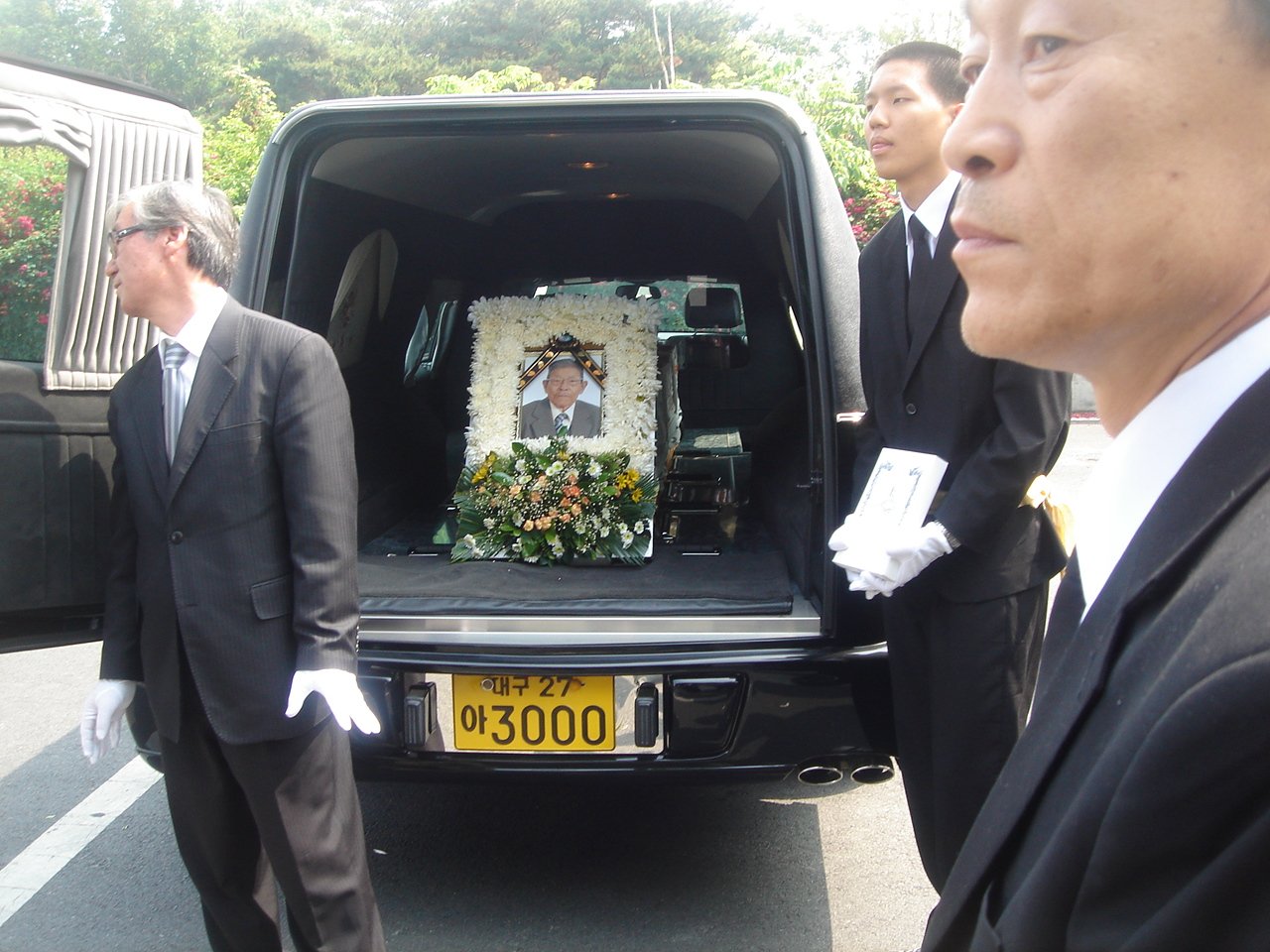
The first ceremony of the final day came at 5:45 a.m. The ceremonies were now getting more heart-wrenching for the family. Another ceremony was held in front of the coffin before it was loaded into the massive black Cadillac hearse for a journey to the old man’s home. Another ceremony was held in the yard there with one of the elders from the village leading the prayers.


Up to this point, things had been moving and dignified; the old man was being sent off with love and affection.

Then we got to the crematorium.


At the crematorium

The coffin was unloaded into what appeared to be the tradesman’s entrance. The family was directed to a waiting room. People could watch TV. Soon, we were hustled into a glass-walled viewing room. Beyond the window was the coffin. Beyond the coffin was a line of a dozen doors to what looked like industrial furnaces. It was horribly stark.


A door opened and the body was shoved through. It was quick, sudden and shocking. Family members yelped in shock. The furnace door closed and everybody was hustled out to wait.
We waited for over an hour under a hot midday sun. We did lunch. We drank beer. We waited some more.
I went back to the waiting room as it was cooler there. I noticed a bank of TV monitors, each one placed above a photo of those being “processed.” You could watch the furnace doors open and the ashes being wheeled out on a trolley. The picture was fuzzy, thank God.
But then the monitor told us furnace No. 4 was ready and we were hustled back into the glass-walled viewing room. The door opened and a tray of bones was dragged out. The women screamed for their father. Everyone looked on in disbelief.
Originally, the family thought they would stick with tradition and bury the old man on a hill near their house. But South Korea is losing its cultural markers. Modern times require quick and easy solutions to life – and death. The dead don’t need to take up space on a hill.
One or two bones were still identifiable. Two crematorium staff swept everything into a box and brought it over to where the family were watching in a state of shock. I stood well back, holding my daughter for comfort. Everyone was distraught. This was no way to create a final memory of a man revered by his family. This was processing, not healing, not loving, not even remembering. Who’d want to remember this?
The bones were crammed into an urn and handed over. Thanks for your patronage; have a nice day. Er, recommend us to your friends…
The family drove back past the old man’s house and village and up into the hills to a Buddhist temple where his ashes would be enshrined and where the family could find spiritual salvation. Religions require belief and everyone wanted to believe that father was on a journey, and his journey would end peacefully in a sacred place. It was sunny and 33 C; no one had any energy left. A Buddhist priest gave the family the spiritual sustenance they sought. We said our last prayers for the old man’s final journey, bowed to the ground one more time to say goodbye and headed home.

Final resting place

 ****

Later that night, a magpie – a symbol of good luck in Korea – flew onto a wall of the house. He gave the impression he belonged there and looked paternally at the family members clustered behind an open window. He flew into the house and perched high up in the living room. Nobody said anything, but everyone thought the same thing. How could you think otherwise?
After refusing to leave, the fearless widow Lee grabbed the bird and ushered it out. It flew away into the night. She watched it go, saying a final, silent farewell.
Sorry, you don’t live here anymore.


****


Oct 6 2012

Can Kim Jong-Un play the symbols?

By Fred Varcoe

Nuclear war is imminent!
It’s true. Pak Kil-yon, North Korea’s vice-foreign minister said so at the United Nations.


Dye another day?


“Today, due to the continued U.S. hostile policy towards the DPRK, the vicious cycle of confrontation and aggravation of tensions is an ongoing phenomenon on the Korean Peninsula, which has become the world’s most dangerous hot spot and where a spark of fire could set off a thermonuclear war,” Pak told the General Assembly (according to The Daily Telegraph).

It’s OK; they let any nutter speak before the General Assembly. Last week, Japan “Prime Minister” Yoshihiko Noda muttered a few words there. Nobody listened.
And not many people are going to listen to Mr. Pak. The speech may have been at the United Nations, but it was most likely aimed at the United States. The Americans, after all, are the only ones dumb enough to listen to such crap.
Of course, Mr. Pak also felt obliged to hammer away at the lame-duck administration of President Lee Myung-Bak, but that’s definitely going to fall on deaf ears in South Korea.
“Since taking office, the current South Korean government has caused the worst situation in North-South relations by making all inter-Korean agreements null and void,” Pak declared dramatically.
Arf, arf. Pot, kettle, black, etc. North Korea is a world leader in ditching agreements when it feels like it. So why do they even bother speaking if they aren’t going to say anything that anyone will listen to (American government officials excepted, of course).


Ha! Ha! Ha! So you know nothing about the outside world either!!?! Ha!


Mr. Pak’s claim that the citizens of the North feel “shame” and “political terror” as a result of South Korean policies and actions will hopefully be supported by a Gallup poll, but until then, he can be safely ignored.
The performance at the U.N. is a sad repetition of the same old line that Pyongyang has been trying to sell for a couple of decades: We have nuclear weapons; the South is provoking us (yes, PSY does look a little like North Korean leader Kim Jong-Un); the Americans are provoking us (they look at us across the 38th parallel in a funny way); the Japanese are provoking us (why don’t they believe that Megumi Yokota is dead?). They want war; we want Mickey Mouse.
Yes, indeed. Mickey Mouse is now a player in the geo-political game. While Mr. Pak trots out the same old old-wave rubbish he’s been indoctrinated in, there have been signs that the North could be changing under young Jong-Un, the son of Jong-Il and grandson of Il-Sung.
The first sign in early July was a video showing Kim Jong-Un attending a performance that included Mickey and Minnie Mouse and other Disney characters. Observers around the world thought this was cute or ironic or daft, but in a country where symbolism is everything, you would think there was something deeper going on. The leader of a Stalinist state enjoying the most visible symbol of its archenemy? That doesn’t happen by accident.


The next sign was the firing of Army chief Ri Yong Ho in mid-July. Firings don’t come much bigger in North Korea and it was a massive show of power by North Korea’s young leader.
Ten days later, Kim Jong-Un is seen attending an important meeting with a young, attractive woman. The woman turns out to be his wife. Seen that before in North Korea? No, didn’t think so. Koreans on both sides of the peninsula don’t go around parading their wives. Korea is a patriarchal society. Men rule (OK, that’s changing in the South, where they might even have a woman president before the end of the year).


Oppa Pyongyangnam Style

Two weeks after that, Kim welcomed back Kenji Fujimoto, his father’s former chef who reportedly fled from North Korea more than a decade ago and has made a tidy living writing books (about North Korea), making speeches (about North Korea) and wearing disguises (to cunningly evade North Korean assassins at events where he is billed as Kim Jong-Il’s former chef).


Kenji Fujimoto tries to blend in with the rest of Japan


That’s four extraordinary events in a month, but they only received passing interest in the West. But to me, they signify:

1. I’m open to talks with the United States (and their leader Mickey Mouse);
2. I’m a modern, forward-thinking Korean (OK, North Korean);
3. I’m my own man and I’m in charge (so I’m the person to deal with, if my wife says so);
4. I’m also willing to talk to Japan (or, at least, eat their food).

If North Korea wants to say something at the United Nations, they really need to come up with something a bit more imaginative than Mr. Pak’s drivel. They would get more respect by admitting they want to change and asking for the help of the rest of the world. The South Korean people are more willing to help – and less afraid of – North Korea than the North Koreans seem to understand.
North Korea’s problems have nothing to do with the outside world. They have cut themselves off from the rest of the world for over 60 years. Now, they don’t know how to get back in touch with it.
Kim Jong-Un is one of the few North Koreans who have lived in the West. He, perhaps, has a chance of building a bridge to the West. But he can’t expect the West to roll over and throw down a red carpet. The truth is the West and South Korea can safely ignore North Korea. If the North has a nuclear bomb, they can’t use it. Everything the North has tried to provoke the outside world has failed miserably. Conciliation is the only thing they haven’t tried, at least, sincerely. (There’s a thought: Why don’t they try sincerity. It works.)
Here’s an idea for Kim Jong-Un: Go to Panmunjom, step into the Blue Hut that serves as a meeting place for North and South Korea and step over the line in the middle that divides the two countries (it’s easy; I’ve done it).
That’s a symbolic gesture even the U.S. State Department would understand.


Sep 27 2012

Letter from Japan

Vote for me!


(This was an experimental column offered to The Japan Times [can’t think why they didn’t take it] and based on the “Dear Bill” column from Private Eye. Originally written in 2001.)

****************************************************************************************

Dear Frank,

I start with a question: Is new Philippines President Gloria Arroyo the first head of state that you’d be willing to shag?

She’s awfully close. It might take a few beers, but give the Filipinos credit – they’ve got a good-looking girl in charge.


mmmmm….


Of course, it doesn’t really matter who’s in charge over there as the country is such a mess. Up until now, the old maxim “you
get the leader you deserve” appears to be true over there.

That’s why I can’t understand why they were so keen to get rid Of “Elvis” Estrada. Just because he was a fat, greasy-haired, philandering gambler with his hand in the till, it doesn’t mean to say he doesn’t deserve to be president of the Philippines. Seems to be the perfect sort of chap to me. I can’t understand why countries like the Philippines don’t have a law that makes embezzlement legal – perhaps up to a limit of $10 million. They’re going to do it anyway, so the government might as well facilitate it.

Anyway, the old maxim has never let Japan down. Look at what we’ve got now: Yasuhiro Mori.

If he was a fat, greasy-haired, philandering Elvis impersonator things might not be so bad.

All right, so he’s a bit on the bulky side, but he has none of the endearing attributes of the Filipino “Elvis.”

He is, basically, a complete twat.

Perhaps the maxim can be reversed (“The leader gets the people he deserves”), but I know not all the Japanese people are as mind-bogglingly moronic as their leaders.

Of course, most of the leaders are.

In the 14 years I’ve been here, Japan has been run by a string of gutless incompetents with the all moral rectitude of a paedophilic priest.

Most of the leaders have come from the Liberal-Democratic Party, which has maintained power for most of the post-War years. To be a Liberal-Democratic politician you have to be:
a) rich;
b) stupid.

Of course, politicians belonging to the Liberal Democratic Party (I thought the name was a joke until I remembered there is no irony in Japan) have a host of other attributes, including bribe taking, bribe giving, shagging geisha girls (and paying them a monthly retainer), lying, cronyism, bribery, lying, egotism, lying and lying.

Why, you ask, do the voters put up with this?

Up until now, it’s been because they think that the Socialists would upset the gravy train that Japan hoped to ride into the 21st Century.

Ah, I hear you say, but Japan’s economy is a complete mess, only a few steps away from that of the Philippines, but much, much deeper in debt.

That’s true, but the succession of LDP governments in the ’90s used the national piggy bank to create the impression that everything was OK.

More recently, they started borrowing – a lot – sending Japan spiralling into debt and almost certain financial ruin a few years down the road.

Mark my words, Japan is going to be hit by a massive financial collapse, followed by – or, perhaps, preceded by – social collapse.

No, forget the maxim; Japan does not deserve such a fate, but the voters have to start realizing that they’ve been conned by their politicians.

The government will only do something about it when it’s too late (and they’ll do too little then). At that time, the voters will turn against them, but that will be too late, too.

I wish Estrada would come over here and be prime minister; you know exactly where you stand with him. You can budget in a few million dollars for him to rent a few mistresses and gamble away, knowing that the rest will be untouched.

Unfortunately, like the Philippines, Japan has little left to gamble with.

Billy.

P.S. What about that Makiko Tanaka … she’s a spunky woman, don’t you think? Might be alright at 4 a.m., pissed out of your brains.


Sep 25 2012

Slash and Burn: Getting a ‘faceover’ in Korea


By Fred Varcoe

I’ve often wondered why so many South Korean actresses look the same. A South Korean friend once told me that 80 percent of the girls in her high-school class had had cosmetic surgery. And this wasn’t the middle of Seoul; this was smalltown Korea. Cosmetic surgery is huge business in Korea.

But I never expected to experience it myself. Probably because I’m not Korean. For many, having surgery is a routine thing to do. My wife’s had stuff done and her sister and even her mother. I didn’t notice.

At least, I didn’t notice until I checked old photos. My wife had quite significant bags under her eyes and my sister-in-law looked positively worn out. Surgery has taken at least 10 years off their faces; they look great. So they decided that it was my turn next.

I hadn’t thought about it, but they told me I had too many wrinkles around my eyes and my face was getting too lumpy. I got a new pair of glasses and could see they may have a point. And, to be honest, I had thought my face was turning to jello.

But not enough to splash $5,000 on a refit. So my sister-in-law blackmailed and bribed me. “Do it for your daughter,” she said. “She doesn’t want a daddy that looks like a granddaddy. And I’ll pay.” Convincing arguments – so I said yes.

The clinic was at the top of a fairly non-descript building with a vacant shop on the first floor. We were shown into a glass-panelled waiting room. A couple of women staff members looked at my face and talked to my sister-in-law (a lay expert). I got the go-ahead.

A very attractive young lady came in and put big dobs of cream on spots on my face. She was nice. I wish I’d had more spots, but she left.

Then I went to see a doctor. Nobody was speaking English. The doctor prodded my face, consulted with my sister-in-law and said OK. After further relaxation time in the waiting room, I was led to another room and told to take my shoes off and lie down on the surgical table. The doctor came in, told me to close my eyes and started to nuke my face with a laser. You could smell the flesh burning and feel the heat of the laser, which felt similar to the laser that nearly erased Sean Connery’s bollocks in Goldfinger. But after attacking my eight spots, I was led back to the waiting room again, bollocks safely intact.

Then it was time for the main show.

Cosmetic surgery, my arse! The results may be cosmetic, but the surgery is very real.

I’ve had lots of doctors cut me up on the operating table, but I was always asleep. Not this time. I was taken to an realistic-looking surgery, told to take off my shoes, given a pajama top that was too small for me and placed on the operating table. Two big lights shone down at me. First the nurse took my blood pressure. It was high (157/84). My unhealthy lifestyle, I thought. They wrapped the outside of my head and placed a cover over my upper torso that left a hole for my face. Then the nurse started washing my face with iodine.

All this time, my sister-in-law was present to act as interpreter – in Japanese, which didn’t help much as her Japanese is much better than mine. The doctor came in and I was told that they would thread a needle into my skin to allow the areas to be anaesthetized. It might be painful, he added, teaching me the Korean word for pain (paekum). As I was to be cut in four places (two sections of about 3 cm above each eye and two sections right beneath each eye, each about 6 cm), they did this four times. It felt like a big needle being threaded through my skin (mainly because that’s what it was) and it hurt like fuck.

Boom, boom, boom went the beat of my heart. Seriously. Was it my body or my mind reacting to this abuse?

Soon after, I felt the pressure of the scalpel, followed by the flow of blood as they opened up my face. I wasn’t sure what was going to happen after that – and I still don’t know what happened. But it took a long time. I was told they cut out about a centimetre of face from under my eyes, but they were also putting stuff in. There was a machine that seemed to inject something (glue, cement, landfill, botox – I don’t really know, but I suspect botox) into the holes cut in my face. When they did it below the eye, it pressured the eyeball and was very uncomfortable.

I became anxious. My blood pressure rocketed again and my heart was pumping so hard it felt like it was only a matter of time before it burst through my chest. The doctor was so concerned, he recalled my sister-in-law from the waiting room to try and get me to calm down. Eventually, my heart stopped trying to burst through my ribs, but I really wanted the machine to stop injecting me with stuff, because it hurt every time it did.

Finally, I guessed that they were doing some sewing. It was a huge relief. I didn’t want to be skewered or cut or cemented or traumatised any more. And I wanted to make sure the doctor hadn’t glued or sewn my eyes shut.

Then it was all over. I could open my eyes. They didn’t feel happy. The doctor said everything had gone fine. The nurses smiled and took their time cleaning me up, which was the only nice part of the whole two-hour procedure. They gave me a mirror. I looked like Dr. Frankenstein’s first experiment and it seemed I had about 50 stitches in all.


Before


My sister-in-law came in. She was enthusiastic, but then spotted a problem. They hadn’t botoxed my forehead as she had requested (it was a bonus procedure). The doctor came back armed with a new syringe and jabbed it into my forehead about 10 times. Thankfully, that was the last procedure. I just wanted to go home and see my daughter.

But she was none too pleased seeing Daddy all bashed up. I told her Daddy had been to see a doctor and his face was painful. I saw a look of worry pass across her face. She wasn’t impressed with the results, but reassured by Mummy, she accepted Daddy’s latest disfigurement.


After


Daddy wasn’t too sure either, despite the enthusiasm of my wife and her sister. The stitched up scars looked ugly (they always do, of course) and the lasered spots were covered with skin-regeneration tape. I felt like I should be in a circus. But my wife and her sister had already decided we should go on a family trip to Daegu, Pohang and a temple or two. As I wasn’t allowed to drink alcohol during my recovery, I was one of the designated drivers (the other designated driver drank anyway). So, everyone else in Korea would be allowed to view the taped-up foreign monster. My wife had provided me with a pair of sunglasses that covered most of the scars, but I still had a large dressing under each eye. It was hard to eat chewy stuff like meat, so I ended up eating less and drinking less. I was allowed to remove the dressing after a couple of days, but my face was jaundice yellow.

The stitches came out six days after the operation and were removed by a very pleasant nurse who was very deft with the scissors. When I’ve had stitches out before, I’ve almost passed out, so I wasn’t looking forward to it. It took around 20 minutes and I managed not to pass out, just. Everyone was pleased with the results, but for me, it was still too early to tell. Eleven days on, my face was nearly clear and the scars less red, but my face felt tight. One of my friends said it seems like I can’t smile any more. The wrinkles in my forehead have gone.

More likely, they’ve just been paralyzed. According to Wikipedia, “Botulinum toxin is a protein produced by the bacterium Clostridium botulinum, and is the most powerful neurotoxin ever discovered.” It doesn’t repair your body, it just stops it working. So your frown doesn’t disappear, your frown muscles are zapped so they don’t have any choice but to stop frowning. I had a fair amount of trouble opening my mouth properly when I tried to eat. Six months later, most of my face is working again, but no botox means no youthful veneer. So if I don’t want a forehead that looks like the ocean outside my front door during a typhoon, I gotta go back for more “jab-a-syringe-in-the-ageing-foreigner” torture.

Maybe I’d be better off just adopting a healthy lifestyle.

You’re right; too late.

“Nurse!”

See, it worked…


Jul 23 2011

Has N. Korea shot its load?

By Fred Varcoe

U.S. Defense Secretary Robert Gates said recently that without America’s presence in the region, “North Korea’s military provocations could be even more outrageous or worse” and China “might behave more assertively toward its neighbors.”
Well, thank God for the American bomb.
Except that America’s presence failed to stop North Korea sinking South Korean warship the Cheonan (as South Korea claim) or prevent North Korea from unleashing an artillery barrage on Yeonpyeong Island close to the disputed sea border between the two countries. It didn’t stop North Korea bombing a South Korean airliner in 1987; it didn’t stop North Korea trying to blow up the South Korean cabinet in Myanmar in 1983; and it didn’t stop North Korea kidnapping Japanese and South Korean citizens for over half a century.
Ah, but surely it has stopped North Korea from invading the South.
Well, it didn’t stop them in 1950 when there was a massive American military presence right next door in Japan, where the U.S. had demonstrated their nuclear might just five years before (the U.S. had a minimal presence in South Korea at the time).
It has been argued that America’s military presence in the region is more of a provocation than a source of appeasement. Certainly on a local basis, American troops are despised both in Japan and South Korea. For some they are a permanent blot on the landscape.
But they are not immovable. America’s greatest ally in East Asia – former colony the Philippines – told the U.S. military to “get the hell out of Dodge” in 1992.
According to a New York Times report, “The American military presence was assailed as a vestige of colonialism and an affront to Philippine sovereignty.”
Which is not dissimilar to how the North Koreans – and quite a few South Koreans and Japanese – view America’s presence in the region today.
You have to ask yourself how a relatively small country like the Philippines can tell the United States to leave, but the world’s third-largest economy – Japan – can’t. In addition, the Philippines were charging the U.S. $203 million a year for the right to have bases on their territory. In contrast, Japan pays in the region of $2 billion to the U.S. as “rent-a-cop” fees.
To get back to Korea, the only country that has stopped North Korea invading South Korea is North Korea. Of course, it’s all about consequences and equations. In 1950, North Korea had the support of China and the Soviet Union, and only had to consider a conventional war against a weak South. And its attack nearly succeeded. The North captured around 90 percent of South Korean territory. The South clung on desperately to a small corner of the peninsula known as the Pusan Perimeter.
After three years of fighting, the prewar divisions and stalemate remained intact. They remain intact today.

Calculation or miscalculation?

The North has growled for nearly 60 years at the U.S.-backed South, killing the odd American or South Korean, blowing up the odd airliner, kidnapping people for no apparent reason.
(The kidnapping of Japanese citizens makes no sense at all considering the number of “North Koreans” born and raised in Japan since the end of World War II. If North Korea wants to teach its spies and terrorists how to speak proper Japanese, then its own “citizens” are more than capable of doing this.)
But how have South Korea, Japan and the West reacted to the North’s most recent provocations? Simple, they’ve done virtually nothing. Of course, diplomats have expressed “concern,” but not enough to interrupt their early evening cocktails.
But North Korea may have miscalculated with its latest attack.
While South Korea’s defense minister was fired for a weak response to the North’s shelling of Yeonpyeong Island, the South still retaliated with a barrage of 40 missiles, which, according to an Asian Times report by Washington-based analyst Yong Kwon, had a terrifying effect on the North:
“Radio Free Asia reported that the shelling of the Yeonpyeong Island caused widespread panic throughout North Korea because of the belief that the United States would retaliate militarily.”
South Korean President Lee Myung Bak has vowed to use significant force if the North repeats its missile attack. This is widely interpreted as meaning air strikes against the North.
The North’s reaction? Let’s have some more six-party talks.
Initially, the South opted not to play that game again. And why would they? The six-party talks are a joke. If the North is caving in after a mild missile response from the South and the mere threat of an air strike, what incentive is there for the South to carry on playing the North’s game?
The North is not willing to negotiate away any of its advantages, certainly not the one ace it’s got over the West: its perceived nuclear capability, which is still unproven and may be more bluff than reality. But if the North is not up for a minor fight over its border, is it up for any fight at all?
The North may well have played its last card. If it can’t intimidate militarily, it can’t intimidate, period.
What actually, can the North do?
It can resort to terrorism, which, as the Palestinians (of old) and Al Qaeda have shown, can be more effective than overt military action, but such action would only serve to isolate the country more and could lead to strong countermeasures by South Korea, Japan and America. And blowing up planes, kidnapping people and assassinating politicians hasn’t worked for the North, so far.
It can attack South Korea again, but this would initiate a serious response from the South (and possibly the U.S.) and the North would then be forced to back down or escalate the conflict.
Such escalation could lead to war, but the North knows that while it can win some significant battles and inflict serious damage on the South, it will never win a war. War is an end game with the North defeated.
Could it use nuclear weapons? Theoretically, yes; practically no. Again, this would be an end-game tactic that would destroy North Korea, and the only raison d’etre for North Korea is to sustain the current regime. Stalemate for them is victory.
An invasion of the South would ultimately destroy the North. And there are serious doubts that the North could sustain a war beyond a few weeks. A ground war requires food and supplies and fuel and it’s unlikely that North Korea possesses enough of these to wage a credible campaign. North Korea may have great numbers – 7 million is the scary figure Western media like to use – but, again, it’s quality vs. quantity. In the Korean War, many soldiers from the South defected to the North. That’s not going to happen again. The reverse is far more likely.
Also, a war – or even a significant escalation – would involve China, but not like 60 years ago when half a million Chinese “volunteers” spontaneously flooded into Korea to aid Kim Il Sung. While half the West’s economy now seems to be tied up in China, nearly all of China’s economy is tied to the West. Do you think the Chinese people/government are going to sacrifice their wealth and stability to assist North Korea?
Wikileaks seem to suggest that the Chinese have less influence and less interest in North Korea than people in the West have given them credit for. The North needs China – without it, it would probably die. China does not need the North and the argument that a buffer is required between capitalist China and major trading partner South Korea just doesn’t hold water any more. China can afford to drop North Korea; it can’t afford to cut its ties with the West.


The citizens of Shanghai probably wouldn't want a war on their doorstep.


And if the South is going to carry out air strikes on the North, a good place to start would be the bridges over the Yalu River that link the North to China. Such a move would finally force China to take a stand on the North and their message to Pyongyang would have to be: Start a war and this time you’ll have to start it and finish it without us. Added to which, northeast Asia without a North Korean problem would ease tension in the region and allow China and the West to intensify their capitalistic intercourse.

While North Korea is the only country that can initiate a war on the Korean Peninsula, South Korea is the only country that should be making the decisions on how to prevent one.
The United States is quite clearly out of its depth and its involvement in the affairs of other countries in recent decades has been nothing short of embarrassing. Iraq, Libya, Palestine, George Bush/Tony Blair, Japan even (the Futenma debacle). My associations with Saudi Arabia, South Korea and Japan have shown me how ridiculous America looks to the citizens of these countries. Politically. Of course, many admire the economic achievements of the U.S., but the Washington would be foolish to think that they have earned universal respect in these and other countries.
And the other “players” in the Six-Party equation?
Japan is arguably the weakest country in the world when it comes to political clout and diplomacy. The government changes yearly and is invariably headed by a weak-willed idiot. Many Japanese would love it to have political power to match its economic strength, but don’t hold your breath. Tony “The Poodle” Blair has nothing on the lap-dancing lap dogs of Nagatacho.
China. Oh yes, the country that has influence on North Korea. North Korea is far less of a puppet state of China than Japan or South Korea is of the United States. China does not dictate to Pyongyang. But China is friendly – very, very friendly. And for a reason.
Any major instability in North Korea would have refugees rushing over the Yalu River into China rather than over the heavily mined DMZ into South Korea. And who or what would replace the Kim dynasty should it be removed from power? The only alternative power in the North is the army and this, reportedly, is extremely factional. An internal power struggle could result in more of the same (i.e., a new North Korean Saddam Hussein or Moammar Gadaffi to deal with) or a pro-West faction (or at least, a pro-West rapprochement faction).

Resolving to resolve nothing

Communist China’s only option in this whole game is to maintain the status quo. It is horrified by the prospect of a pro-Western, pan-Korean government and it certainly doesn’t want any more Koreans clogging up its border cities.
So it reaffirms its faith in the Six-Party Talks, knowing that they will never, ever bring about a resolution – certainly not the kind of resolution that the West anticipates. The purpose of the Six-Party Talks is to get the North to give up its nuclear weapons. This won’t happen, especially as the North watches the West bombing the crap out of Libya. North Korea and China win by prolonging the Six-Party Talks. Just as war is an end game, talks are a no-end game.
In an article in the April/May edition of the RUSI (Royal United Services Institute) Journal by respected East Asia watchers Scott Snyder and Byun See Won, the writers talk of “the Six Party Talks through which North Korea’s nuclear programme and other issues must be addressed.” From the diplomatic perspective, this seems logical. Talking is what diplomats do. But if it’s resolution that you want, this won’t fly.
To their credit, the writers mention “doubts about China’s credibility as a broker of the Six Party Talks” and even suggest that China may have given North Korea a “blank cheque to pursue provocations with apparent impunity.” But this is also a misreading of China’s position. China may not be dictating to Kim Jong Il and at times may appear not to have the ability to control Pyongyang, but its patience would wear out rapidly if tensions escalated to extensive military action. For China, stalemate is the only answer; it certainly doesn’t want a resolution.
And it certainly doesn’t want a war. Snyder and Byun point out: “According to U.S. officials, Chinese party leaders have reportedly expressed increasing anxieties about Pyongyang’s provocations,” although the Chinese military apparently are less concerned.
China’s military may be flexing its muscles in other areas, but North Korea knows that it won’t get backing for any large-scale military action against the South (although it was interesting to note that while China condemned U.S.-ROK military exercises in the Yellow Sea, it failed to condemn the North’s bombardment of Yeonpyeong Island).
The other player in the six-party talks is Russia, presumably invited as it, too, borders North Korea, but also because they’d get extremely pissed off if they weren’t dealt with on equal terms. Russian involvement is peripheral. Russia is only interested in scoring diplomatic points, mainly against the West.
Gates has said, “There must be concrete evidence that [the North’s leaders] are finally serious about negotiations.” Well, good luck with that one, Mr. Gates, ‘cos you’re not going to get it.


In an insightful Asia Times Online piece (“Misunderstandings May Prove Fatal”), Kwon puts it thus:
“The bewildered diplomatic and military overtures to Pyongyang and Beijing are signs that Washington has barely begun to take a serious interest in the country that it has been confronting for over 50 years. Currently, too many policies towards the DPRK are made using presumptions and analogies that are fundamentally inconsistent with what little we do know about the regime’s objectives and perceptions. … Washington has placed a profound amount of faith in China’s leverage on Pyongyang. … Ultimately, the current policy of treating the DPRK as a Chinese client or puppet state is inherently flawed.”
Kwon concludes: “The assumptions that drive American foreign policy towards the DPRK are too often historically uninformed, and over-exaggerate or misinterpret the threats posed by Pyongyang. The Obama administration should recognize this and treat North Korea as it should be treated, a uniquely North Korean problem.”
That’s the first step. The second step is for Seoul to distance itself from Washington. Don’t give in to American blackmail as the Japanese did over the Futenma Air Base in Okinawa.
Diplomatic sources have suggested that Seoul is keen to press a hard line against the North. Pressure not to do so comes from outside. The South Korean government must have the courage of its convictions. North Korea is now in a uniquely vulnerable position. Its supreme leader seems to know he will not live too long (although he looked healthy enough on his recent trip to China) and it now has serious doubts about its ability to scare the South. Economically, it’s as much a basket case as ever and food shortages are a constant threat. There have been isolated reports of unrest in North Korean cities. Depriving the North of assistance will strengthen the South’s hand, assuming it can rid itself of brotherly guilt by making its people suffer more. While many in the South don’t want instant reunification, they still regard Korea as one country separated by politics (and blame Japan, Russia and the United States for the division). The North currently believes that the South will respond with force if another Yeonpyeong occurs. For that to be effective, that’s exactly what the South should do.
Raising the stakes is a risky game, but the North has never had to call the South’s bluff before. The South must now play its cards right if it wants to win the game.

END