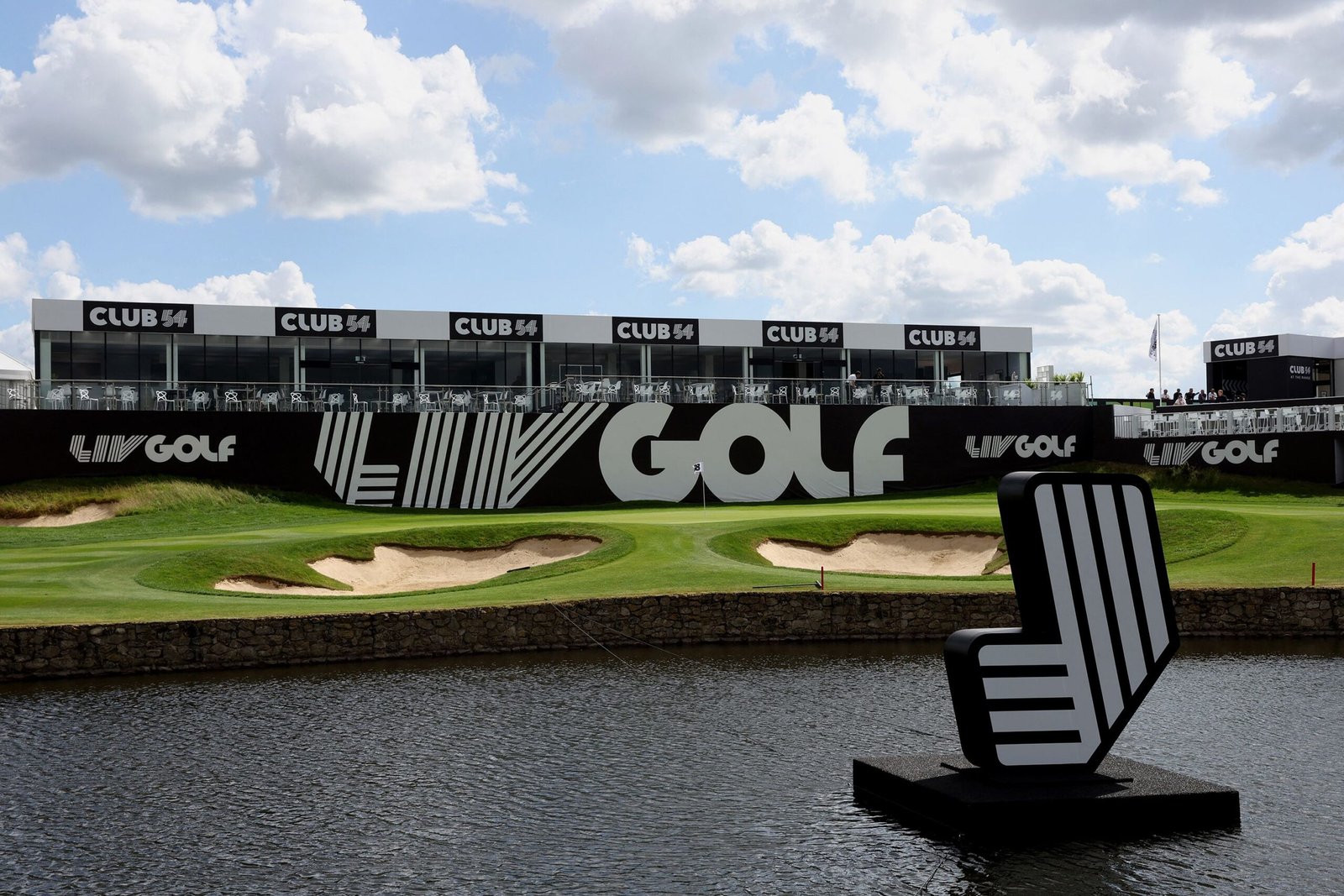
How can golf save itself? The advent of LIV has divided the sport and the sport needs to be undivided. The fact that it has been allowed to remain in a state of chaos is a disgrace and nearly all the participants are guilty to some degree. No surprise there. Most sports organizations are run by self-serving, blinkered idiots. They can’t see the bigger picture and don’t want to give up their slice of power. As a result, they don’t have the answers. Luckily, I do.
Indentured independent contractors Unlike football, golf doesn’t have a powerful, world governing body like FIFA. It has the R&A in Europe and the USGA in the United States and they generally govern the game of golf and the rules of golf, as well as events like the four majors. There are many tours around the world, including the DP World Tour (formerly the European Tour), the Australasian Tour, the Champions Tour, the Sunshine Tour, the Japan Tour, the Asian Tour, the Korean Tour and, of course, the PGA Tour, which also controls the Korn Ferry Tour and PGA Tour Americas, both of which are feeder tours for the PGA Tour.
And then along comes LIV, throwing cash around to tempt players to abandon their commitments to the PGA Tour and play on an abbreviated but highly lucrative new tour of three-day tournaments with a closed field.
The PGA Tour cries foul, saying these players are breaching their contracts and have no right to jump ship, even though the PGA Tour calls these players “independent contractors.” The contracts state that these “independent contractors” can’t play anywhere else without permission from the PGA Tour. But restriction of trade is illegal. In the United States, “restraint of trade covers a broad range of activities, including: – Creating a monopoly; – Coercing someone to stop doing business; – Using non-compete clauses or other contract provisions to prevent someone from conducting business; – Negatively affecting someone’s ability to conduct business freely.”
The PGA Tour wanted to dominate professional golf and was very angry when it found out it couldn’t. On the surface, LIV’s intervention was a vulgar attack on the PGA Tour. But LIV didn’t want to operate in a vacuum and approached the PGA Tour to come to an agreement so that everyone could play golf happily. The PGA Tour refused to talk, and this was a stupid, irrational and self-defeating misstep. LIV didn’t want to destroy the PGA Tour; it wanted to complement it.
But like a jilted husband, the PGA Tour and its lackeys in Europe lashed out, invoking fines and bans for the rebel players, and even penalizing college players.
Talk about a resolution Clearly, it needs to be resolved. Of course, some people might not want it to be resolved. Tens of players have earned PGA Tour cards because some of the world’s best golfers are playing on the LIV tour. A number have become winners for the same reason. Would Scottie Scheffler be so dominant if Jon Rahm, Brooks Koepka and Bryson De Chambeau were still playing on the PGA Tour? I think not. LIV has created opportunities for many journeyman players on the Korn Ferry and PGA tours, but that’s actually a good thing. People can see just how good a golfer ranked #150 or #200 can be. The elitism of the PGA Tour has damaged the game of golf. OK, LIV is a closed shop, but it has livened up the sport and given it new ideas, ideas that the PGA Tour has been happy to steal.
Lovers of golf do not want to see division and professional golf should provide a stable living for all its practitioners, not just the top 100. The Players Impact Program is an insult to golfers lower down the order. The idea that players who did not jump to LIV should get a bonus is absurd. Everyone on the PGA Tour has already benefited professionally and financially by the absence of some of the world’s best golfers.
So, we need a settlement. That settlement should make professional golfers true “independent contractors” so that they can play anywhere they want (subject to some eligibility rules). The irony is it’s so easy. By banning LIV golfers from PGA Tour events, it was the PGA Tour that suffered.
The further irony is that the LIV golfers did not want to leave their respective tours and in truth there was no reason why they should have. The top golfers always want to play in the top PGA Tour events, as well as the majors and the Ryder Cup. If the PGA Tour had said, “OK, let’s see how we can make this work,” things would have worked out fine.
Having criticized the PGA Tour, LIV also can’t escape criticism. Its ambush of the PGA Tour and DP World Tour and even college golf was crude and largely unnecessary. Better timing could have allowed the players to voluntarily hand in their PGA Tour cards.
No harm done The truth is LIV was never going to do much damage to the PGA Tour. The PGA Tour basically damaged itself. The PGA Tour said players couldn’t play in tournaments that clash with PGA Tour events without permission. This doesn’t make sense. For a start, most of the top golfers play less than half the events in a year and some PGA Tour tournaments clash with (drum roll) … other PGA Tour tournaments. If the PGA Tour can schedule tournaments against itself, why can’t LIV (and let’s not forget tournaments in other parts of the world, especially the DP World Tour, which is played on far more interesting courses than the PGA Tour)?
Here’s an interesting concept for the PGA Tour: make your golfers true independent contractors and eliminate any restrictions about playing events that clash with PGA Tour events. This, I believe, is what golf fans would like to see.
Freedom is only going to benefit golf. I’m not saying that the PGA Tour shouldn’t make rules or even require a minimum number of tournaments, but it can rationalize its current system. Tennis did that by grading its tournaments and awarding points accordingly. The world tours can come up with a universal grading system (which it kind of has already for world ranking points) and apply it to their tours. (My system is: The points value of a tournament is determined by the world ranking of the top 10 players in that tournament.) The players can then decide their own schedules. I’m pretty sure the PGA Tour will still win out. Three of the majors are still in the U.S., plus the Players Championship. (I would like to see a World Major added to the international golf schedule, classifying it as a major and moving it to different parts of the world every year). It will be in LIV’s interests to make a schedule based around the top events in the PGA Tour schedule, partly to ensure that the top players will play and also to avoid antagonizing the PGA Tour.
Cruel and unusual punishment? That’s all good, but we still have to deal with LIV, whose ambush of the PGA Tour was underhand. The elephant in the room is punishment. The PGA Tour and the DP World Tour went nuts, banning players outright and imposing ludicrously high fines (many of which LIV has paid). Let’s remember, the PGA Tour wants the top players back, so imposing fines of $100,000 a week is just stupid. If you want the players back, you have to find a reasonable way to do it. So, step 1: fine the players according to their status in the game, which can be determined by how much they’ve taken home in prize money on the relevant tours during their career.
Phil Mickelson will be at the top end of that scale, having won nearly $97 million. Fine him 1 percent of that total. Alternatively, you could come up with a system based on how many tournaments he’s competed in or won, but there’s no reason to make it complicated. A $970,000 fine for Phil makes sense to me.
The second part of re-integration is more difficult: ranking. Phil, a guy who won the PGA Championship four years’ ago, is currently No. 1,159 in the world. My feeling is that the LIV players have to start at a lower level. They can’t just jump back to their previous status. Where applicable, I would allow the top LIV players back into tournaments on sponsor exemptions because then the PGA Tour gets what it wants: the top players. Those lower down the totem pole will have to earn their places back. If they were on the DP World Tour or the Asian Tour, then those tours can decide how to allow them back. Many players have benefited – professionally and financially – from the absence of LIV players from the various tours, so it’s up to those LIV players to fight their way past this new batch of players on merit and earn their place back at the top table. A one-time massive Q school perhaps.
Team talk If it sounds like I’m talking about the end of LIV, then I’m not. I like LIV. I like the 54-hole, shotgun start format and I think the PGA Tour should hold similar events. But I don’t see LIV as financially sustainable in its current format. One of my earlier ideas to change LIV was to make it a four-day event with the team event based on the fourth day of play. All four days would go to deciding the individual winner but the teams for the fourth day would be decided by the results of the first three days. So, Team 1 would consist of the players who finished first, 13th, 25th and 37th. Team 2 would consist of the players who finished second, 14th, 26th and 38th, and so on.
That works fine and would be exciting except that LIV’s financial goals include making the teams into money-making franchises. Having different players every week wouldn’t fit that model. But the current model – four players to a team – is too restrictive and if a player’s injured, the team’s down to three or using a sub. My idea is that each team consists of a squad of eight to 10 players. Now, remember, this will work out if the players really are “independent contractors,” so that players can switch between tours during the season. Sure, LIV can tie a few down with appearance fees to make sure the teams don’t consist of college players, but my vision is to have eight to 10 top players in a squad but still only have four players representing a team in any given week (although if there’s no clash with other events, having all eight or 10 players play over four days would be really cool).
And that system takes my next idea a step further: the LIV Tour should be a TEAM EVENT ONLY. Fans love team events and LIV has clearly been trying to capitalize on that, but not very successfully. The team element is always secondary to the individual competition. Put it as the focus of LIV and you have a dynamic, fan-friendly event (hopefully with better names than Smash or the Cleeks). Then, the franchise system will work. Fans would love it, broadcasters would love it, sponsors would love it, and money-grubbing agents and businessmen would love it.
The PGA Tour has already agreed, provisionally, to work with LIV and some say it needs LIV’s proposed $1.5 billion dollar donation. In short, professional golf needs to look at itself in the mirror; if it was starting from scratch, how would it be organized? Probably a lot better than it’s being organized at present.
How can golf save itself? The advent of LIV has divided the sport and the sport needs to be undivided. The fact that it has been allowed to remain in a state of chaos is a disgrace and nearly all the participants are guilty to some degree. No surprise there. Most sports organizations are run by self-serving, blinkered idiots. They can’t see the bigger picture and don’t want to give up their slice of power. As a result, they don’t have the answers.
Who he?
So, how can a semi-retired sports journalist in Japan have the answer? Well, let me tell you a little story.
The 2002 FIFA World Cup was initially a battle between Japan, South Korea and Mexico. Well, actually, that’s not really accurate. The 2002 World Cup was, effectively, promised to Japan by FIFA’s dastardly president Joao Havelange, the Brazilian Vladimir Putin of football. What was the attraction of Japan, a country that had never qualified for the World Cup? Havelange promised the World Cup to Japan at a time when Japan was arguably the most powerful economy in the world. Japan had stacks of money and, as we all know now, FIFA executives love money.
Unfortunately, not everyone loves Japan, especially South Korea. No way was South Korea going to stand by and allow Japan the glory of hosting the World Cup. So, led by South Korean Football Association President Chung Mong-joon – possibly the most unpleasant and unprincipled man in football, an incredibly high bar that he cleared effortlessly – South Korea joined the party, prompting Mexico to leave it. This party was going to be incredibly expensive.
Inspired by historical hate, the two football associations generously entertained FIFA executives (and their wives) as they made their case to host the World Cup. Japan claimed it had the best football league in Asia – the J. League – while South Korea pointed out that it had qualified for the World Cup five times to Japan’s zero. Both countries had enough money to erect any number of massive stadiums, build roads and hotels, cater to thousands of football fans and express their generosity to FIFA’s executives. All FIFA had to do was to pick one out of two.
By this time, 1995, I had been based in Japan for eight years as a sports writer and I also had a Korean girlfriend. So, I visited both camps, assessed their bids and came up with an answer – the only possible answer.
FIFA hadn’t managed to come up with the right answer and were still staring two wrong answers in the face: Japan or South Korea. FIFA sent a team of experts to assess the merits of the two countries’ bids so that the FIFA Executive Committee could pick a winner.
I knew when the FIFA inspection team would arrive in Japan and on what morning they would read their first morning paper (and I assumed it would be The Japan Times, who I worked for). I ran an article on the back page with the headline, “Cohosting is the only answer for the 2002 World Cup.” And I explained why. The inspection committee – as told to me by a FIFA vice-president – took the cohosting idea back to FIFA headquarters in Zurich and a fight began that ended, as we all know, in the first co-hosted World Cup.
Those are my credentials. I have, of course, come up with many other brilliant ways of improving sport, including how to make football better, but we needn’t go there at present, except to point out that FIFA still thinks penalty shootouts are a good way of deciding a World Cup final. I use this to show how utterly out of touch FIFA can be.
The other example I use relates to the odious Chung. He was once touted as a possible president of FIFA for being “a clean pair of hands.” When I read this in my morning newspaper, I literally spit my porridge all over the table. But I digress. However, I have to mention that the current president of the Korean Football Association is a guy by the name of Chung Mong-gyu, part of the extensive Chung family that controls the Hyundai Group. So, related to Chung Mong-joon who was banned from all football activities for six years by FIFA in October 2015. This was reduced to 15 months because, FIFA told me, of Chung’s “lack of any prior record of unethical behavior, his public stance against corruption within FIFA, and the meritorious services he provided to FIFA and football over the years.” Another table covered with porridge and spit. But I digress.
Indentured, independent contractors
Unlike football, golf doesn’t have a powerful, world governing body like FIFA. It has the R&A in Europe and the USGA in the United States and they generally govern the game of golf and the rules of golf, as well as events like the four majors. There are many tours around the world, including the DP World Tour (formerly the European Tour), the Australasian Tour, the Champions Tour, the Sunshine Tour, the Japan Tour, the Asian Tour, the Korean Tour and, of course, the PGA Tour, which also controls the Korn Ferry Tour and PGA Tour Americas, both of which are feeder tours for the PGA Tour.
And then along comes LIV, throwing cash around to tempt players to abandon their commitments to the PGA Tour and play on an abbreviated but highly lucrative new tour of three-day tournaments with a closed field.
And the insane amounts of cash do their job, pulling in some of the best and most popular players in the world. The PGA Tour cries foul, saying these players are breaching their contracts and have no right to jump ship, even though the PGA Tour calls these players “independent contractors.” I’ve covered this elsewhere, but to recap briefly, if they are independent contractors, surely they are independent from the PGA Tour and free to take their business elsewhere.
But the PGA Tour doesn’t see it like that. The contracts state that these “independent contractors” can’t play anywhere else without permission from the PGA Tour. Sounds like duress and monopoly. Restriction of trade is illegal. In the United States, “restraint of trade covers a broad range of activities, including:
Creating a monopoly;
Coercing someone to stop doing business;
Using non-compete clauses or other contract provisions to prevent someone from conducting business;
Negatively affecting someone’s ability to conduct business freely.”
I’m not a lawyer, but how does the PGA Tour reconcile this with their designation of golfers as “independent contractors?” Curiously, this hasn’t been tested in court and all lawsuits have been dropped after the PGA Tour and LIV made a provisional business agreement that seems to be lying fallow.
The PGA Tour reacted angrily to LIV and the defecting players, and prompted the DP World Tour to do likewise (although the legal case is still being tested there, so players can still play on the tour). Apart from the majors, the PGA Tour was/ is the pinnacle of golf. That’s where everyone wanted to play, that’s where the competition was best and that’s where the money was … before LIV. But it seems that the PGA Tour wanted to dominate professional golf and was very angry when it found out it couldn’t.
On the surface, LIV’s intervention was a vulgar attack on the PGA Tour. BUT LIV didn’t want to operate in a vacuum and approached the PGA Tour to come to an agreement so that everyone could play golf happily. The PGA Tour refused to talk, and this was a stupid, irrational and self-defeating misstep. LIV didn’t want to destroy the PGA Tour; it wanted to complement it. So the story goes…
But like a jilted husband, the PGA Tour and its lackeys in Europe lashed out, invoking fines and bans for the rebel players. How spiteful were they? Reportedly, players have been fined $100,000 per tournament missed and banned for up to five years. Former PGA Tour winner and now YouTube star Wesley Bryan was suspended by the PGA Tour for appearing in a YouTube event sponsored by LIV, not an actual LIV tournament. Oh, but it gets worse.
As a result of LIV, the PGA Tour has spread its tentacles even further by targeting college players. On May 11, 2022, the PGA Tour announced the following, according to the Golf Channel website:
“For college players hoping to both earn status through PGA Tour University and compete in the LIV Golf Invitational Series, they will now have to pick one or the other. PGA Tour U announced on Wednesday an amendment to its rules of regulations. Effective immediately, players will forfeit their PGA Tour eligibility if they tee it up in a professional tournament that is unranked by the Official World Golf Ranking and not otherwise approved by the PGA Tour. This news comes after last week’s report that LIV Golf had extended membership to the top six players in the World Amateur Golf Ranking, a group that includes several players currently in the PGA Tour U Velocity Global Ranking.”
So, the PGA Tour is trying to destroy golf careers of people who have never been on the PGA Tour.
Resolution No. 9 (and counting)
Clearly, it needs to be resolved. Of course, some people might not want it to be resolved. Tens of players have earned PGA Tour cards because some of the world’s best golfers are playing on the LIV tour. A number have become winners for the same reason. Would Scottie Scheffler be so dominant if Jon Rahm, Brooks Koepka and Bryson De Chambeau were still playing on the PGA Tour? I think not. LIV has created opportunities for many journeyman players on the Korn Ferry and PGA tours and actually that’s a good thing. People can see just how good a golfer ranked #150 or #200 can be. The elitism of the PGA Tour has damaged the game of golf. OK, LIV is a closed shop, but it has livened up the sport and given it new ideas, ideas that the PGA Tour has been happy to steal. I pity those dogmatic haters of LIV who can’t see that a 54-hole tournament with no cut and a shotgun start is always going to be exciting (I’ll pass on the crappy music, thanks).
Lovers of golf do not want to see division and professional golf should provide a stable living for all its practitioners, not just the top 100. The Players Impact Program is an insult to golfers lower down the order. The idea that players who did not jump to LIV should get a bonus is absurd. Everyone has already benefited professionally and financially by the absence of some of the world’s best golfers.
So, we need a settlement. That settlement should make professional golfers true “independent contractors” so that they can play anywhere they want (subject to some eligibility rules). The irony is it’s so easy. By banning LIV golfers from PGA Tour events, it was the PGA Tour that suffered. Talk about shooting yourself in the foot.
The further irony is that the LIV golfers did not want to leave their respective tours and in truth there was no reason why they should have. The top golfers always want to play in the top PGA Tour events, as well as the majors and the Ryder Cup. But the PGA Tour said no and allowed their spite to field weakened fields with golfers that no one had heard of. If the PGA Tour had said, “OK, let’s see how we can make this work,” things would have worked out fine.
Having criticized the PGA Tour, LIV also can’t escape criticism. Its ambush of the PGA Tour and DP World Tour and even college golf was crude and largely unnecessary. Better timing could have allowed the players to voluntarily hand in their PGA Tour cards. It wouldn’t have made the PGA Tour much happier, but it would have allowed them to do things by the book (although, to be honest, I’m not exactly sure what the book says). Having Greg Norman as the face (and mouth) of LIV was always going to be confrontational. That was never going to work out. Norman had tried his World Tour concept before and the PGA Tour didn’t like it.
So, both sides had contributed to the bad blood between them and left me thinking, “This is Japan and South Korea all over again.” And the answer is almost the same: coexistence.
The truth is LIV was never going to do much damage to the PGA Tour. The PGA Tour basically damaged itself. The PGA Tour said players couldn’t play in tournaments that clash with PGA Tour events without permission. This doesn’t make sense. For a start, most of the top golfers play less than half the events in a year and some PGA Tour tournaments clash with (drum roll) other PGA Tour tournaments. Make that make sense. For example, the Truist Championship is held the same week as the ONEflight Myrtle Beach Classic in May. If the PGA Tour can schedule tournaments against itself, why can’t LIV (and let’s not forget tournaments in other parts of the world, especially the DP World Tour, which is played on far more interesting courses than the PGA Tour)?
Here’s an interesting concept for the PGA Tour: make your golfers true independent contractors and eliminate any restrictions about playing events that clash with PGA Tour events. This, I believe, is what golf fans would like to see. It’s not what the PGA Tour wants to see because the PGA Tour wants to dominate and control top-level golf. And it was doing that pretty well until LIV came along. The PGA Tour is basically the U.S. PGA Tour. Nice courses, good players, not a problem. But LIV and the DP World Tour have shown that there’s a lot of exciting golf played in many, many different countries on some fantastic courses. And results have shown that complete unknowns can come through and play with the elite. Wesley Bryan, pro golf’s St. Sebastian, recalls how he was a nobody doing trick shots on YouTube one year and a PGA Tour winner and top 50 golfer the next year.
Freedom is only going to benefit golf. I’m not saying that the PGA Tour shouldn’t make rules or even require a minimum number of tournaments, but it can rationalize its current system. Tennis did that by grading its tournaments and awarding points accordingly. The world tours can come up with a universal grading system (which it kind of has already for world ranking points) and apply it to their tours. The players can then decide their own schedules. I’m pretty sure the PGA Tour will still win out. Three of the majors are still in the U.S., plus the Players Championship. (I would like to see a World Major added to the international golf schedule, classifying it as a major and moving it to different parts of the world every year). Hopefully, LIV will qualify for OGWR next year and Jon Rahm won’t be ranked No. 81. It will be in LIV’s interests to make a schedule based around the PGA Tour schedule, partly to ensure that the top players will play and also to avoid antagonizing the PGA Tour.
Punishment and compromise
That’s all good, but we still have to deal with LIV. The establishment of another tour outside the mainstream is nothing new and new events often come up with great new ideas, as you can see in other sports such as cricket, volleyball and not football. LIV has shaken up golf and made it realize that the traditional four-day tournament doesn’t have to define tournament golf. But LIV’s ambush of the PGA Tour was dirty and only achieved by throwing obscene amounts of money at players. In its current format, it’s unsustainable. We’ll get to that.
The elephant in the room is punishment. The PGA Tour and the DP World Tour went nuts, banning players outright and imposing ludicrously high fines (many of which LIV has paid). Should the players have been punished? Probably, yes, but that “independent contractor” thing is still rattling around in the background. Let’s remember, the PGA Tour wants the top players back, so imposing fines of $100,000 a week is just stupid. If you want the players back, you have to find a reasonable way to do it. So, step 1: fine the players according to their status in the game, which can be determined by how much they’ve taken home in prize money during their career.
Phil Mickelson will be at the top end of that scale, having won nearly $97 million. Fine him 1 percent of that total. Alternatively, you could come up with a system based on how many tournaments he’s competed in or won, but there’s no reason to make it complicated. A $970,000 fine for Phil makes sense to me.
The second part of re-integration is more difficult: ranking. Phil, a guy who won the PGA Championship four years’ ago, is currently No. 1,159 in the world. My feeling is that the LIV players have to start at a lower level. They can’t just jump back to their previous status. Where applicable, I would allow the top LIV players back into tournaments on sponsor exemptions because then the PGA Tour gets what it wants: the top players. Those lower down the totem pole will have to earn their places back. If they were on the DP World Tour or the Asian Tour, then those tours can decide how to allow them back. Many players have benefited – professionally and financially – from the absence of LIV players from the various tours, so it’s up to those LIV players to fight their way past this new batch of players on merit and earn their place back at the top table. A one-time massive Q school perhaps.
Long live LIV
If it sounds like I’m talking about the end of LIV, then I’m not. I like LIV. I like the 54-hole, shotgun start format and I think the PGA Tour should hold similar events. But I don’t see LIV as financially sustainable in its current format. One of my earlier ideas to change LIV was to make it a four-day event with the team event based on the fourth day of play. All four days would go to deciding the individual winner but the teams for the fourth day would be decided by the results of the first three days. So, Team 1 would consist of the players who finished first, 13th, 25th and 37th. Team 2 would consist of the players who finished second, 14th, 26th and 38th, and so on.
That works fine and would be exciting except that LIV’s financial goals include making the team into money-making franchises. Having different players every week wouldn’t fit that model. But the current model – four players to a team – is too restrictive and if a player’s injured, the team’s down to three or using a sub. My idea is that each team consists of a squad of eight to 10 players. Now, remember, this will work out if the players really are “independent contractors,” so that players can switch between tours during the season. Sure, LIV can tie a few down with appearance fees to make sure the teams don’t consist of college players, but my vision is to have eight to 10 top players in a squad but still only have four players representing a team in any given week (although if there’s no clash with other events, having all eight or 10 players play over four days would be really cool).
And that system takes my next idea a step further: the LIV Tour should be a TEAM EVENT ONLY. Fans love team events and LIV has clearly been trying to capitalize on that, but not very successfully. The team element is always secondary to the individual competition. Put it as the focus of LIV and you have a dynamic, fan-friendly event (hopefully with better names than Smash or the Cleeks). Then, the franchise system will work. Fans would love it, broadcasters would love it, sponsors would love it, and money-grubbing agents and businessmen would love it.
The PGA Tour has already agreed, provisionally, to work with LIV and it could do with LIV’s proposed $1.5 billion dollar donation. I would like to see some of the money in golf going further down the totem pole. Professional golf needs to look at itself in the mirror. If it was starting from scratch, how would it be organized? Probably a lot better than it’s being organized at present.
****
APPENDIX 1
After writing this, I smashed my sources into Google Gemini to see what kind of solution AI would come up with. I’ll leave it here….
****
Based on reports, expectations from players, and demands from major sponsors, the fundamental solution to the conflict between the PGA Tour and LIV Golf involves unity, financial reconciliation, and structural concessions from all parties, especially the three major entities: the PGA Tour, the DP World Tour, and the PIF/LIV Golf.
Key solution paths and necessary compromises identified in the sources include:
1. Corporate Merger and Financial Integration
The most widely discussed solution involves merging the competing financial interests under one roof, often cited as the only solution by those invested in the game’s future.
• PIF Investment into PGA Tour Enterprises: The Saudi Public Investment Fund (PIF), which funds LIV, is reportedly close to finalizing a massive investment into the new PGA Tour Enterprises, which was established earlier this year. Reports claim a deal is finalized or nearing completion that could see PIF invest as much as £1.5 billion into the PGA Tour.
• LIV under PGA Tour’s “Umbrella”: This corporate deal would reportedly result in LIV Golf coming under the PGA Tour’s operational “umbrella,” with the PIF taking an equity stake and receiving representation on the PGA Tour Enterprises board.
• Loyalty Compensation: To resolve financial friction with loyal PGA Tour players, the PIF’s investment is claimed to include funds set up to reward players who rejected massive LIV offers. Alternatively, the PGA Tour loyalists could receive equity stakes in PGA Tour Enterprises.
• Concessions: DP World, a major sponsor, is demanding that all parties recognize the necessity for “concessions and conciliations” to achieve the unified outcome that fans and sponsors desire.
2. Player Reintegration and Scheduling Compromises
A major challenge is determining how LIV players return, and how to restructure the global calendar to bring the world’s best players back together consistently.
• Free Movement Between Tours: LIV player Jon Rahm stated that his ideal merger would allow golfers to “play freely between tours” to enjoy specific major tournaments (like the American Express or Torrey Pines) while maintaining DP World Tour membership for fall events.
• Selective Return Based on Merit: PGA Tour player Wyndham Clark suggested that golfers with strong resumes, such as major winners like Dustin Johnson and Brooks Koepka, have earned the right to return without sanctions, whereas players who lacked that pedigree and left primarily for money should face difficulty returning.
• Avoiding Antitrust Issues: Legal concerns related to antitrust laws mean that LIV Golf will likely need to continue operating in some form after a deal is reached, possibly with a calendar condensed to the autumn to avoid conflicting with major PGA Tour events.
• Specific Access Proposal: Former Ryder Cup captain Paul McGinley proposed a structural solution where the top 10 LIV golfers are granted access to five PGA Tour Signature Events and The Players Championship. In return, the PGA Tour could field two teams in LIV’s season-ending Team Championship.
• LIV Format Change: LIV Golf has independently begun working toward legitimacy by announcing a shift from its controversial 54-hole format to the traditional 72-hole format starting in the 2026 season. This change is intended to satisfy Official World Golf Ranking (OWGR) criteria, which would allow its players to automatically qualify for Majors and remove a major institutional barrier.
3. Structural Changes and Governance
To stabilize the “product” for sponsors, some propose that the PGA Tour adopt elements of the LIV model.
• Mandatory Player Attendance: Paul McGinley argued that the PGA Tour must “evolve away from being a members organization” that treats players as independent contractors free to pick and choose events. He advocates for the PGA Tour administration to take “more in control of the product” by using contracts to obligate top players to play certain events, similar to LIV Golf.
• Global Calendar and DPWT Focus: Sponsors like DP World are demanding a resolution that includes a more integrated tour throughout the year, promoting DP World Tour (DPWT) events and encouraging greater participation from American players outside of the U.S. season. Rory McIlroy has also stated that his vision is for a global calendar.
• DPWT Leverage: The possibility of LIV Golf pursuing a separate deal with the DP World Tour could provide the European circuit with leverage to secure its standing in any future unified golf landscape.
Senior Golf Digest writer Joel Beall penned a column the other day trying to put the LIV Golf Series into perspective and he did a pretty good job of it. Here’s some excerpts and comments. (You can read the full article here.)
****
“It’s too early to validate LIV’s aspirations to ‘reinvigorate’ the sport, particularly given the motives behind them. But the enterprise can’t be dismissed, much as the PGA Tour wishes to do so. Not after LIV’s coup of signing Dustin Johnson and in-their-prime stars like Bryson DeChambeau and Patrick Reed. Not with a number of other players about to follow suit or weighing a similar jump. Not with LIV’s endless mountain of gold that would put Scrooge McDuck to shame. The operation has brought the game to the once-unthinkable precipice of a schism at the professional level.”
LIV’s pot of gold could actually undermine its own ambitions. It’s not a bottomless pot. LIV can only survive if it exists as a credible golf tour (or series of events). It’s not going to be paying $100 million appearance fees 10 or even five years down the line. The tour has to be accepted or it will die.
“LIV Golf CEO Greg Norman has said he does not want a schism; he envisions LIV to be additive to the sport. Norman is also rolling out a field in London this week that, with a few notable exceptions, is composed of has-beens and never-wases.”
It’s a cheap shot to label these golfers as has-beens (and let’s not forget, many of them are/ were PGA Tour players). A lot of these slurs refer to the likes of Lee Westwood, Martin Kaymer, Sergio Garcia, Ian Poulter, Richard Bland and even Phil Mickelson. Apart from being a clickbait cheap shot, it’s just inaccurate. Lee Westwood was the DP World Tour champion (for the whole season) less than two years ago; Kaymer is a former World No. 1; Garcia won the Masters five years ago and his last PGA Tour title was less than two years ago; Poulter won his last PGA title four years ago and made the Top 40 in each of the majors in 2021; Bland is playing the best golf of his career at 49 and won his first title a year ago, as well as leading the U.S. Open after two rounds last year; and Mickelson was the defending PGA champion when all this kicked off. Maybe they’re not in the Top 10 anymore, but these guys are still relevant — and major attractions — in any tournament they play in. Granted there are some lesser names in LIV, but there’s a reason for that, which is that the PGA Tour is so restrictive. It amounts to 125 elite players and maybe 100 more hangers-on. The sport needs more events around the world to accommodate more golfers. There are a lot of good golfers out there desperate for competition and a decent payday. Why doesn’t the PGA Tour put a cap on prize money and give more golfers more chances to earn a living playing tournament golf? Yes, I can see the flaw in that argument, but the PGA Tour seems to be more inclined to throw money at the bigger players.
Getting to LIV envisioning to be “additive to the sport,” why shouldn’t it? This whole mess could have been solved if the PGA Tour had met with Norman (or, even better, someone from LIV with more brains and less attitude). In fact, the PGA Tour should have said to its golfers: “You can play anywhere, anytime.” Instead, they said, “Play on our Tour or die.” The PGA Tour’s stance makes no sense at all. It can still have points or prize money tallies to produce rankings and eligibility, but then the ball is in the court of the golfers. They would be able to determine when and where they play golf and if they want to try to play in the majors or Ryder Cup. The PGA Tour was never going lose out by giving golfers more freedom. There are plenty of good golfers out there. And the top golfers don’t play every week. For example, in the 2020/21 season, Scottie Scheffler played 25 out of 52 tournaments. So, why can’t the PGA Tour exist with LIV and other tours? Independent contractors are just that: independent. That’s why the PGA Tour will lose the upcoming lawsuits.
“Competing for ungodly sums of money under the misguided notion that it will somehow help a maligned government sportswash its image.”
Let’s throw this argument under the bus. The United States and Europe do not have the moral high ground here. The DP Tour inaugurated a tournament in Saudi Arabia AFTER the murder of Jamal Khashoggi. The PGA Tour also has had events in Japan, which has a despicable justice system and the death penalty, and China, which is responsible for so many crimes against humanity it makes Saudi Arabia look like Sweden. The accusation of “sportswashing,” should not be a factor in this debate.
“[LIV] could help the PGA Tour and DP World Tour, cleansing them of those stuck in the purgatory between relevance and the Champions circuit and making way for fledgling stars. But for all that it hasn’t been, LIV has shown just enough of what it could be—and the chaos it could impel—and that’s the problem. There’s the problem of the disruptor in question, the series being funded by the Saudi Arabian government, for it is driving this discussion and its direction seems aimless.”
Good point. What is the purpose of LIV? To liven up golf? Maybe. Norman used to go on about expanding the golf world beyond North America, but he undermines his own argument by having five of the eight tournaments in the United States. Nothing in Korea, Japan, Australia, South Africa, continental Europe? Again, if LIV had sat down with the PGA Tour and drawn up a plan where they didn’t tread on each other’s toes, golf could have gained. But the PGA Tour, according to Norman, refused to even talk to LIV about such things.
“Perhaps the issue begins with the vehicle itself. There is a fundamental fault with the competition that LIV Golf is creating, and for a second put aside the problematic strings to this venture and focus on that competition. At its heart, golf is appreciated for being the purest rendition of meritocracy, where spots aren’t given and you only make what you earn. LIV Golf is the antithesis of this spirit. It offers signing bonuses and no-cut guaranteed paydays to players most fans would not pay to see. Aside from the general curiosity surrounding its Thursday debut and a better-than-expected production, the LIV Golf presentation had no appeal. There was nothing on the line, no reason for these guys to be playing aside from the chance to line their pockets no matter how they finish. It is a glorified exhibition.”
Good point. LIV should be taking its stars to places where they aren’t normally seen. And if the two sides had sat down and had a polite conversation, points (perhaps on a lesser scale) could have been awarded to LIV events that counted in the U.S. or Europe. LIV is a golf tournament, a competition, so it has credibility. Give it some respect and embrace it and that might benefit the game.
“Here are bigger purses, bigger bonus pools, bigger FedEx Cup bonanzas coming to the tour, but they don’t have the resources to engage in an arms race, and legacy won’t be enough.”
Do we know what’s going to happen with the FedEx Cup, the Ryder Cup and the majors? Will the big names be dumped? Ryder Cup captains have captain’s choices, while major winners have extended eligibility. Sit down, talk it out….
“This moment should force a hard look in the mirror to those at PGA Tour headquarters. The reason rogue leagues were fun thought exercises is because the tour has fallen into stasis. The product has become oversaturated with too many events and at times it seems allergic to creativity.”
Scheffler played 25 out of 52 tournaments last season and Dustin Johnson played 21, so why the need to punish those playing elsewhere? More events mean more opportunities for all golfers.
“Which is why, ultimately, a potential schism inflicts the most pain on fans. This has become a sideshow with the worst type of actors, and as bad as the play has been, where it could lead is worse. Now fans’ attention will be divided between an entity that doesn’t know what it’s doing and doesn’t offer much in the way of competition yet does boast some marquee names, against the traditional power with true competition and true consequences that could lose the very stars needed to pull people in. Forget additive; that is the very definition of subtraction. It is a diluted product.”
The PGA Tour’s reaction was knee-jerk, although somewhat understandable or at least predictable. They HAD to sit down with Greg Norman or, better still, a rational LIV executive. Or even a Saudi Public Investment Fund official with the first question being, “What do you want?” They just needed to have a conversation….
As a former resident of Saudi Arabia (1980-1985) and a big golf fan, news of the Saudi Golf League really grabbed my attention. Except there is no Saudi Golf League. The knee-jerk Western media insist on calling the LIV Golf Invitational Series that because it is being financed by Saudi Arabia’s Public Investment Fund, which the West believes is blood money controlled solely by murderers.
In fact, it was set up by King Faisal – who some say was the most benevolent of Saudi monarchs – 50 years ago to aid projects within the Kingdom. In the last decade, it has expanded its influence in the international sphere and is now headed by Crown Prince Mohammed bin Salman Al Saud, the son of the current monarch, King Salman. Its most high-profile recent investment was the purchase of Newcastle United football club in England.
The Crown Prince has been condemned by many in the West who hold him responsible for the murder of journalist Jamal Khashoggi in the Saudi consulate in Istanbul in 2018. Those responsible for the murder had ties to the Crown Prince, so the West believes he has blood on his hands and anything he touches – such as investment funds – is tainted by this blood.
Once the connection is made, it’s hard to unmake, at least when it comes to Saudi Arabia. When it’s Israel, murders are done in self-defense.
On May 11, Israeli forces in the occupied West Bank killed Al Jazeera journalist Shireen Abu Akleh while she was covering raids by the occupying Israeli army. She was wearing a “press” vest and was not in a conflict zone. Her fellow journalists at the scene believe she was targeted and the Israeli military reportedly continued firing at the group of journalists she was with even after Abu Akleh and her colleague had been hit. To add insult to injury, Israeli police then attacked mourners at her funeral.
So, will the West try and stop investment from Israeli institutions? What will be the consequences for Israel? Well, we all know the answer to that. Israel operates with impunity in the Occupied Territories and beyond. Unlike Saudi Arabia, it will be free to sponsor any golf tournament it wants to without consequences or criticism. There were the usual pro-forma condemnations from the West and calls for an investigation, which, of course, will whitewash the whole affair. In truth, the killing has already been forgotten. But the LIV Golf Invitational Series is still blackballed for being a “Saudi” event. This is unbelievable hypocrisy.
Whiter than white?
Do you think the PGA Tour’s sponsors are whiter than white? Let’s look at some of them:
AFLAC: Irony of ironies, AFLAC was accused of misclassifying employees as “independent contractors” and was said to have “exploited workers, manipulated its accounting, and deceived shareholders and customers” by a number of former employees. ASTELLAS: In 2016, Astellas UK was suspended from the U.K.’s pharmaceutical trade body as a result of “shocking” institutional failures, lies and “deception on a grand scale” in what was described as one of the worst cases ever considered by industry regulators. In 2019, the company in the U.S. agreed to pay $100 million over allegations that they violated the False Claims Act. AVIS: In 2021, Avis Budget Group agreed to pay $10.1 million to resolve allegations that it violated the False Claims Act. BRIDGESTONE: Bridgestone subsidiary Firestone produced defective tires that resulted in up to 192 deaths in the United States and paid Ford $240 million in compensation and had to settle many other lawsuits. CITI: In 2018, Citibank reached a settlement to pay $100 million in the Libor scandal. It was also in bed with the Japanese mafia and lost their private banking license because of their mob connections. COCA-COLA: Where to start? Wikipedia has a whole page on “Criticism of Coca-Cola,” ranging from carrying on business with Russia during the war in Ukraine, carrying on business with apartheid South Africa, racial discrimination (for which they had to pay $192.5 million) and allegations their partners were involved with murdering union reps. FEDEX: FedEx previously partnered with the National Rifle Association, only breaking things off after coming under pressure from activists (i.e., when it hurt their bottom line). MASTERCARD: According to Wikipedia, in 1996, “about 4 million merchants sued Mastercard in federal court for making them accept debit cards if they wanted to accept credit cards and dramatically increasing credit card swipe fees. This case was settled with a multibillion-dollar payment in 2003. This was the largest antitrust award in history.” METLIFE: MetLife only recently decided to cut ties with Assault Weapon Investments, Controversial Weapon Investments and Tobacco Investments. It was fined $3.2 million in 2012 for “loan service and disclosure practices” and $10 million in 2019 for “internal control failures.” MITSUBISHI ELECTRIC: CEO Takeshi Sugiyama resigned in 2021 after it transpired the company had been falsifying data for air conditioners and brake compressors for trains for over 35 years. It was also guilty of selling substandard rubber products. It also tried to subvert an inquiry into other malpractices, leading to the disciplining of 12 executives in December 2021. PRICEWATERHOUSECOOPERS: PWC has a long list of dodgy practices, including a $229 million settlement over a multibillion-dollar accounting fraud with Tyco International, being paid to set up a tax avoidance scheme and gender discrimination. In January 2018, it was banned in India and fined $2.1 million over its involvement in a fraud case and was accused of conflict of interest in Angola. SHELL OIL: Shell has been involved in Saudi Arabia for over 70 years and currently works with Al Jomaih and Shell Lubricating Oil Company in Saudi Arabia. Friends of the Earth says that Shell has a “long history of contempt for people and planet,” is “jointly responsible for murders in Nigeria,” “avoids taxes” and is “involved in bribing a former petroleum minister to achieve an offshore oil field.” STRYKER: Who are they? Well, Stryker provides the “Official Joint Replacement Products of the PGA Tour and Champions Tour,” despite having to pay out $1.5 billion for defective hip implants and a further $80 million for unauthorized devices used in knee surgery. MORGAN STANLEY: Even a condensed list of violations and dubious practices by Morgan Stanley would require a small book. Check out the Corporate Research Project page on Morgan Stanley. Highlights include racial and gender discrimination, a $2.6 billion settlement for selling “toxic securities” in 2015, $1.25 billion for Fannie Mae and Freddie Mac charges, and millions of dollars in other penalties for transgressions such as fraud and misleading practices. The PGA also has FIVE “Official Betting Operators” (not including Phil Mickelson, who is alleged to have lost $40 million gambling). All legal, of course, but certainly not designed to improve people’s lives. UPS is not a PGA Tour sponsor, but has recently divorced itself from two top golfers – Lee Westwood and Louis Oosthuizen – because of their connection to LIV. While they could claim it’s a commercial decision, it’s clear that they’re also trying to stay away from being associated with “blood money.” Like other golf sponsors, UPS finds it difficult to stay away from controversy. It lost a class-action lawsuit for racial discrimination in the late 1990s, had to pull an ad making false claims in 2009, had to pay $40 million “to end a federal criminal probe connected to deliveries it made for illicit online pharmacies,” had to pay “more than $25 million to settle charges it submitted false claims to the federal government” and had to pay $5.3 million to settle False Claims Act allegations earlier this year. Wait, there’s more…. In 2019, according to The Washington Post, “a group of United Parcel Service employees allegedly helped to import and traffic massive amounts of drugs and counterfeit vaping oils from Mexico, part of a scheme that exploited a vulnerability in the company’s distribution system, according to police. The lucrative operation at times involved moving thousands of pounds of marijuana and narcotics each week from narco-traffickers into the United States to destinations across the country, using standard cardboard boxes that were carefully routed through the private mail carrier’s trucking and delivery systems.” According to a CNN report in 2019, a “white female [UPS] driver refused to deliver a package to a predominantly black neighborhood she referred to as ‘Nigger City’ and ‘NiggerVille’.”
This is not an in-depth dig into companies that sponsor the PGA Tour and golfers; it’s a quick flip through the internet.
Saudisney
And where does Saudi Arabia’s Public Investment fund put the rest of its money? Well, $43 billion is invested in the United States. So, if you go to Disneyland, ride an Uber, bank at Bank of America, use Facebook, play a Nintendo game or fly on a Boeing plane, you are taking advantage of Saudi “blood money.”
How about golf in Saudi Arabia? The DP World Tour established the Saudi International in 2019 – the year after the murder of Jamal Khashoggi – and a number of top golfers have taken Saudi money by playing in tournaments there.
Saudi Arabia’s policy of executing criminals and terrorists also came under scrutiny, especially after 81 people were executed in a single day in March 2022. Full details of the crimes weren’t available, but it was revealed that many were for terrorism, murder or conspiracy to murder. The PGA is based in the United States, which executes criminals. It also has events in Japan, which executes criminals (including 13 in a single month in July 2018). And in China, which arbitrarily executes so many people Amnesty International has lost count. It certainly outstrips Saudi Arabia.
The usual memes about people in Saudi Arabia being executed for being gay were dragged out, but these have to be taken with a pinch of salt. Although my time in Saudi Arabia was many years ago, the country I lived in for five years bore no resemblance to the country portrayed in the British media, which at the time were astonishingly racist in their depictions of Arabs. There was a gay clique in the building I lived in and it seemed to be party central for that crowd. None of them were executed.
What about other “crimes?” A number of foreigners where I worked were arrested for drinking alcohol, but they weren’t locked up in a hole for years on end; they were just deported. A lot of them had drinking problems before they went to Saudi Arabia. The Saudis knew people produced and drank alcohol; they just wanted to keep it under control. Once when I went to buy a car, the young guy I was dealing with thought I might walk away from the deal. He told me his father wanted to meet me. He took me to his father’s office and left me. His father opened a draw in his desk and pulled out a bottle of whisky and two glasses. Deal sealed. (I was also arrested twice in Saudi Arabia but forgiven for my transgressions and allowed to stay in the country.)
Independence day
There’s also hypocrisy in the PGA Tour (and DP Tour) terming golfers “independent contractors,” yet severely restricting their trade by demanding permission to play in any non-PGA Tour event without permission. Yes, the golfers did agree to this, but did they have much choice? This stinks of monopoly and restriction of trade is illegal.
In the U.S., “restraint of trade covers a broad range of activities, including: Creating a monopoly Coercing someone to stop doing business Forcing someone to change their business so it isn’t as competitive Using non-compete clauses or other contract provisions to prevent someone from conducting business Negatively affecting someone’s ability to conduct business freely.”
I’m not a lawyer, but how does the PGA Tour reconcile this with their designation of golfers as “independent contractors?”
Let’s face it, the PGA Tour is just one competition, effectively in one country. Why is it so scared of the LIV events? The obvious reason is that it might lessen the value of its own tour, but that’s highly unlikely. We already have three of the four majors in the U.S., as well as strong tours in Europe, Japan, Canada, Asia, etc., and they co-exist with the PGA Tour. And there are even times when the PGA Tour competes with itself, holding two events at the same time, so surely there’s room for alternative events. On top of that, not all the top players play every week, so if they’re not playing in a PGA event, why should they need permission to play elsewhere?
The truth is the PGA Tour is scared of competition. Three years ago, it increased the number of tournaments golfers must play every year for them to be able to keep feeding off the golden goose. As a result of LIV, it has gone even further by targeting college players. On May 11, the PGA Tour announced the following, according to the Golf Channel website:
“For college players hoping to both earn status through PGA Tour University and compete in the LIV Golf Invitational Series, they will now have to pick one or the other. PGA Tour U announced on Wednesday an amendment to its rules of regulations. Effective immediately, players will forfeit their PGA Tour eligibility if they tee it up in a professional tournament that is unranked by the Official World Golf Ranking and not otherwise approved by the PGA Tour. This news comes after last week’s report that LIV Golf had extended membership to the top six players in the World Amateur Golf Ranking, a group that includes several players currently in the PGA Tour U Velocity Global Ranking.”
A different experience
The LIV events are offering a different experience and what can only be described as silly money, even sillier than the PGA’s massive purses. In fact, the top PGA golfers earn so much money they really don’t need to look elsewhere. But to earn that money, they have to play a 72-hole stroke-play tournament and make the cut. LIV is proposing, no-cut, 48-member, three-round tournaments. It’s a different format (there’s also a team element to add spice to the results). The sad part of this is that the PGA, one of the most conservative organizations in sport, believes it has the perfect product and can’t even see a need for change. Sometimes, sports organizations need a good kick to get them moving. Cricket famously changed when outsider Kerry Packer tried to buy it. Cricket still has its five-day tests, but the rest of the game has been transformed with different formats and leagues around the world. Volleyball is another sport that has reinvented itself over the years with radically different rules and new tournaments. Golf, like football, seems to wallow in its own self-importance. It’s a great sport, but that doesn’t mean it can’t change and in recent weeks, a number of top golfers have said that there’s “room for improvement” in golf.
Greg Norman, LIV’s front man, has been trying to change the PGA-centric view of the sport for years. LIV is not his first attempt at shaking up the sport. Whether or not he’s got his tactics right remains to be seen. Perhaps going head-on against the PGA wasn’t the best move. Buying the Asian Tour could have given him more legitimacy (of course, I don’t know if it wants to be bought but it agreed to sanction the LIV events after a $300 million investment) and less conflict, and he could have grown his product from there. Swooping down from above with a billion dollars to spend was a bit crass and his “we’ve all made mistakes” quote concerning the murder of Jamal Khashoggi should have stayed in his overactive mouth.
However, it doesn’t mean that Saudi Arabia has to concede the moral high ground to America, its snooty golf tour or its pampered, hypocritical golfers. I’m sure they feel morally just when they fill their environmentally unfriendly cars and jets with gas from Saudi Arabia and play games on their Made-in-China electrical goods.
The LIV Series is just another series of golf tournaments. If golfers sponsored by racist and criminal companies think they have the moral high ground, fine; they can stay where they are. But if you want to live your life on hyper-ethical grounds, you’d better clean up your act to vegan levels. “Blood money” hides in the strangest places.
We were due to set off from Jeddah in the morning but the incoming aircraft failed to arrive. And it kept on failing to arrive. Weather was a problem, apparently. It eventually arrived late in the afternoon and took off in darkness after we had waited for around 10 hours. The Boeing 720 was hardly new and I was surprised when the pilot said they would be flying at an altitude of 41,000 feet! Weather, apparently. As we crossed the Red Sea and approached Ethiopia, we could see the weather: massive cumulus nimbus clouds rising even higher than the plane’s 41,000 feet. And all filled with spectacular lightning. The pilot worked his way around the clouds and managed to get us down in Addis without incident. Getting out of Addis a week later was even stranger. For a start, check-in time for the flight was 04:30, not good because the overnight curfew at the time didn’t finish until 05:00. On the plus side, we’d rented a Volkswagen Beetle, which just about managed to get us to the airport in a truly biblical rainstorm. Exit procedures were normal, except all foreigners were thoroughly searched for contraband or money. Unfortunately, I hadn’t changed one of the $100 notes I had before leaving and the man found it and, naturally, took it. Then we had to wait to board our plane. It took some time, but after a long delay we were on board. Then we were hurtling down the runway. Then we stopped suddenly and went back to the gate. Something was wrong with the plane. We disembarked and waited. Another plane was flying in, we were told, and we could go on that one. It flew in and we waited. It had hit birds on the way in, so we couldn’t use it, we were told. A few hours later, it suddenly filled up with passengers and took off for somewhere else. No problem, we were told, there was a Boeing 720 in the workshop we could use. We’d probably been at the airport for about seven hours at this point and it wasn’t exactly a well-appointed airport. But we managed to get on the plane, nervously, and were pleasantly surprised when it actually took off. Our destination was the small newly independent country of Djibouti on the Red Sea, but we were scheduled to stopover in Dire Dawa, a desert town in the middle of nowhere. The pilot landed well, some passengers got off and we waited. Then, we waited some more. The doors were open and it was quite hot. Then they took the stairs away. Hooray! We’re going somewh…. no we’re not. “We can’t start the plane,” the captain told us. “And they can’t fix it here, so they’re flying in a mechanic from Addis.” They gave us a bag of nuts and a Pepsi. It was hot. Dire Dawa’s a desert town. We were probably on the plane for three or four hours, but the mechanic flew in with his jump leads and started the plane. The stairs came back. Passengers. Suddenly a rampaging troop of little old Dire Dawa ladies surged onto the plane, all holding massive bunches of leafy twigs. It was chaos. One sat next to me and smiled, wondering what the belt thing was on her seat. She had no idea how to do it up, so I did it for her. She held on to one of her massive bunches of twigs; the other two were in the overhead locker. The inside of the plane looked like a tree nursery. It was qat, the narcotic twig that blokes in that region chew on all day to get stoned. It fetched a high price in Djibouti, a former French colony with Western prices.
Qatnip
We got no more Pepsi as the plane had turned into an arborium. Everywhere you looked there were twigs. My little old lady probably asked me if I wanted to buy any qat, but I found it hard trying to converse with a tree. The plane started to descend. Tension spread throughout the cabin, not because we didn’t know if the plane would survive the landing, but mainly because the little old ladies were gearing up for qat fever. As soon as the wheels touched the tarmac, they were up out of their seats, grabbing their twigs and demanding the door be opened. The Ethiopian cabin crew never stood a chance. The doors flew open and the little old ladies rushed down the steps toward the terminal. Getting through immigration and customs was almost impossible as the ladies negotiated their way through with qat. When we finally opened the doors to the outside world, we entered into chaos as hundreds of Djiboutians negotiated prices with their little old lady dealers, who offloaded their stuff and jumped back on the plane to Dire Dawa. We managed to get a taxi into town, only to find that five of the six hotels there were full. The sixth – the Hotel de France, if my memory is correct – was probably empty for a reason: no working air conditioners and no running water.
When bones were discovered during construction on the new Olympic stadium in Tokyo, people said the Games could be cursed. It’s been a tough journey to 2021 and the cursed Olympics continue to suffer problems even as the 2020 Games start in 2021.
It’s not even Tokyo’s first cursed Olympics. There were also the 1940 Games that never happened. At the Nazi-led Berlin Olympics in 1936, the IOC in their wisdom decided to award the next Games to another militaristic, expansionist host: Tokyo. As with 2020, part of the selling point of the Japanese was to showcase Tokyo’s recovery from a devastating earthquake – the 1923 quake that levelled half the city. But, similar to 2020, the real reason was vanity and self-serving. Japan wanted to be accepted as a “first world” nation.
To this end, it figured it had to “reach out” to its neighboring countries, by attacking and colonizing them, starting with Korea. Japan’s much coveted men’s marathon gold medal in 1936 was won by a colonized Korean — Sohn Kee-chung — reluctantly representing his oppressors. In 1937, Japan initiated a war with China and this proved costly, literally. The government decided it couldn’t afford to wage war and host the Olympics, so it went with the choice it thought it would do better in – war – and informed the IOC that it no longer wanted to host the 1940 Olympic Games – but would be interested at a later date when it had finished subjugating East Asia. The Games were handed to Helsinki but were eventually cancelled due to the war in Europe.
Korean Sohn Kee-chung running the marathon for Japan at the 1936 Berlin Olympics.
Getting the 1964 Olympics so soon after waging an inhumane war against the world was, perhaps, another odd decision by the IOC, but it satisfied the organization’s remit to spread the Games around the world and enabled Japan to believe it was, or could be, a first-tier nation. Japan embarked on a massive modernization program, hoping to impress the world. In the end, Japan hosted a splendid and successful Games and achieved its goals. For the 2020 Games of 2021, the best Tokyo can hope for is survival.
While there was an inevitable wave of excitement after Tokyo was awarded the 2020 Games, a bumbling, incoherent government led by a bumbling, incoherent prime minister and a dithering, out-of-touch Games Organizing Committee led by a dithering, out-of-touch ex-prime minister led to a series of incomprehensible and almost comical decisions.
Arguably, the most egregious decision was made by then-Prime Minister and Olympic cheerleader Shinzo Abe when he scrapped the design of the new Olympic Stadium. Tokyo had chosen to go with a stunning design by world-famous and award-winning architect Zaha Hadid, an Iraqi-born British woman, to replace the 1964 Olympic Stadium, which was well past its sell-by date. Hadid’s design would have seen a beautiful, 21st-century stadium emerge in its place. It was the kind of stadium that Olympics are made for and it was perfect for Blade Runner Tokyo. Her design hit all the right buttons: spectacular, original, big, on budget. Well, on budget until it went out to tender to Japan’s extravagant construction companies. The costs ballooned, the media started to complain and Prime Minister Abe, sensing political capital, pulled the plug on the Hadid stadium. The job was handed to established Japanese architect Kengo Kuma – one of many who had complained about Hadid’s design – whose concept was so utilitarian, it has been likened to an oversized toilet.
Zaha Hadid’s fabulous, but rejected, design for Tokyo’s new Olympic Stadium.
But we’re getting ahead of ourselves. Tokyo’s bid was based on a number of falsehoods. The first, famously spoken by Abe, was that the problems surrounding the Fukushima nuclear plant were under control and that the Tokyo Olympics would be the “Recovery and Reconstruction Games,” with a special emphasis on Fukushima. He knew the problems surrounding the devastated nuclear plant were ongoing and unresolved, and the residents of the prefecture were still suffering, with thousands living in temporary housing. The cleanup of the nuclear plant will take at least 50 years. In April this year the government approved the dumping of over a million tonnes of contaminated water into the Pacific Ocean. Fukushima Prefecture got to host the first events of the 2020 Games, two days before the Opening Ceremony. As a sop to its years of suffering, it hosted a few baseball and softball matches at one of the most remote baseball stadiums in the country, in fact so remote there was a bear scare on the opening day.
The second major falsehood was that the climate in Tokyo in late July and August would be “moderate.” July, August and September are the hottest months of the year in Japan. And it’s very hot. In 2019, the temperature in Tokyo reached close to 41 celsius on July 23. In the six days before that, according to The Mainichi newspaper, 94 people died and tens of thousands had to be treated in hospital for heat-related problems. Such were the concerns of the organizers last year, they opted to move the marathon races – one of the premier events for Japanese sports fans – to Sapporo in Hokkaido, where they are hoping it will be cooler. But last year, Hokkaido, usually the coolest place in Japan, set a record temperature in May of 39.5 C, more than two degrees higher than the previous record. The 1964 Games took place in October for the simple reason that it is cooler then.
The actual bid and the budget were, unsurprisingly, wholly inaccurate. The initial estimate of costs was $7.5 billion. Last year’s postponement cost at least $3 billion and the official estimates now predict costs of $16 billion. Unofficially, the Games are likely to cost much more than that, possibly even double according to some estimates. Early on, Tokyo sought to cut costs by changing the bid outline and using existing or cheaper venues while obstinately refusing to trim the sports program. After initially considering an existing venue, Tokyo Governor Yuriko Koike agreed to build a new venue for volleyball, which is just around the corner from the new aquatics center. Other sports will use existing venues, some outside of Tokyo.
Due to COVID-19, spectators have been ruled out. A number of surveys in Japan have indicated that 60-80 percent of Japanese wanted the Games canceled or postponed, largely due to ongoing concerns over COVID-19. While Japan has suffered far less in the pandemic than other countries, this is seen by its citizens as more by luck than judgement. No one knows why the infection rate appears to be low in Japan, but with the Olympics approaching, that rate has risen sharply, putting pressure on a health system that isn’t designed to cope with a pandemic. Tokyo has been under a state of emergency for much of 2021, while in other parts of Japan, people were dying at home because of a lack of hospital beds. One hospital in western Tokyo put up posters demanding that the Games be canceled and these sentiments have grown stronger by the day. Japanese people are afraid the Olympics could turn into a super-spreader event and make a bad situation uncontrollable. To make matters worse, Japan’s vaccination program has been a disaster, with only 17 percent of the population getting fully vaccinated by July 7, compared to 48 percent in the United States and 52 percent in the United Kingdom.
The government of Prime Minister Yoshihide Suga has been under constant fire for seemingly putting the Olympics ahead of the welfare of Japan’s people. Whether true or not, the perception remains that the government were going to hold the Games at any cost. It didn’t help that the main liaison between the government and the Games had to resign. Former Prime Minister Yoshiro Mori stepped down as president of the Tokyo Organizing Committee in February after making inappropriate remarks about women. Mori may have been idiotic but he was a smooth conduit for the Organizing Committee to reach the ears of government. His replacement, seven-time Olympian and current lawmaker Seiko Hashimoto, does at least have Olympic credentials and one of her first moves was to add 12 women to the Executive Board.
But Mori wasn’t the only victim of bad judgement. Hiroshi Sasaki, the executive creative director for all four 2020 ceremonies, was also forced out after floating the idea of dressing up a well-known, plus-size entertainer as a pig and calling her “Olympig.” The Tokyo Organizing Committee of the Olympic and Paralympic Games Committee fired Kobayashi Kentaro as show director of the 2020 Opening and Closing Ceremonies two days before the Opening Ceremony for a joke about the Holocaust that he made 23 years ago. An early casualty in the Olympic process was the proposed logo for the Tokyo Games. Kenjiro Sano’s design turned out to be almost identical to that of the Théâtre de Liège in Belgium, so out went Sano and “his” design. Automaker Toyota announced it would not air TV commercials related to the Games in Japan. And in a follow-up to the stadium controversy, architect Kengo Kuma was accused of stealing the best bits from Zaha Hadid’s design, but the finished stadium was dull enough for people to realize that it was actually quite different.
Even nature wouldn’t cooperate with the Games. In August 2019, a Paralympic triathlon test event was canceled due to E. coli bacteria in the water, which was also close to the maximum allowable temperature. Triathletes who had managed to swim through Tokyo’s murky waters complained that it smelled like a toilet. Scientists and coaches suggested that the events should be relocated, but the Organizing Committee said measures would be taken to alleviate the problems before the Olympics.
While almost any major sporting event has problems – Rio, for example, had plenty – Tokyo has managed to shoot itself in the foot so often, it’s barely able to walk. Poor leadership and poor decisions have left the organizers with red faces on too many occasions. If the Tokyo Olympics are “cursed,” it’s been a self-inflicted curse.
The Olympic Games were meant to highlight what a fabulous place Japan is, how its economy is not really shit, how the streets are clean, the people friendly and life is just a fantasy.
Well, the reality is most of that is just a fantasy.
Just 100 meters from the new, unspectacular Olympic Stadium, a Frenchman is staging a hunger strike. Vincent Fichot’s wife stole their children and he hasn’t seen them for three years.
While Japan loves to promote its cuteness and fluffiness, the reality of life in Japan is that it has serious flaws, most notably in its judicial system. Carlos Ghosn fled not because he thought he might be found guilty of what was a minor crime, but because the judicial system sets out to pre-judge and pre-punish those who cross the invisible line of social wrong. If you are the nail that sticks up, you will be smacked down into submission.
To say the rulings on family matters are odd would be an insult to odd. They are inhumane.
Japan does not subscribe to the notion that divorced parents can jointly raise their kids. In most cases, one parent gets to keep the kids, the other is told to fuck off forever.
When former Prime Minister Junichiro Koizumi’s wife was pregnant with their third child, the slimeball politician decided to get a divorce. Usually, the mother gets to keep the kids, but as Koizumi is a slimeball politician, his sons were delivered to him. Then, slimeball that he is, he tried to grab son No. 3 as soon as it came out of the womb. This time, he was unsuccessful, so he cut off son No. 3 and has refused to meet him ever since.
As a married man, I can imagine the need for some parents to divorce, but as a father, I can’t ever imagine divorcing my child.
Vincent Fichot is not alone. Some 150,000 children are divorced from a parent every year in Japan. Australian Scott McIntyre was jailed for 45 days just for going to his in-laws’ apartment as he searched for his kids.
Fichot has sought help from French President Emanuel Macron, the EU and the United Nations. All have condemned Japan for its heartlessness. Japan’s response: “We don’t care.” The Justice Minister even refuses to acknowledge the issue.
When Japanese citizens were kidnapped by North Korea, it was a massive issue. How ironic that it was Father-of-the-Year and de facto child kidnapper Junichiro Koizumi who helped get some of Japan’s citizens returned. When two Americans helped free Carlos Ghosn from its penal hostage justice, Japan threw a tantrum and demanded Ghosn was returned. When that failed, it demanded the people who freed Ghosn be effectively kidnapped to Japan to face its unjust justice system.
When children are kidnapped against the law, Japan turns a blind eye to justice.
When I was young, comic books depicted Japanese soldiers as the most evil people on the planet. In Japan, old soldiers never die; my guess is they join the Justice Ministry.
Wouldn’t it be nice to sympathize with Naomi Osaka? At least then I’d be on a bandwagon with thousands of others. People unrelated to tennis or journalism are falling over themselves to give her a figurative hug – and a free pass for everything she says.
Let’s take law professor Scott Douglas Gerber writing possibly one of the worst sports opinion pieces ever in USA Today: “It is profoundly disturbing that Naomi Osaka felt compelled to withdraw from the French Open, one of tennis’ four Grand Slam tournaments. It is also illegal to make her feel like she needed to withdraw. Osaka had informed tournament officials that news conferences adversely impacted her mental health, and that she would be willing to be fined for not participating in them during the tournament. … Shockingly, the president of the French Tennis Federation did not agree to Osaka’s reasonable request for an accommodation.”
Let’s get one thing very clear here: The only person who says Naomi Osaka has mental health issues is Naomi Osaka herself. Not one shred of evidence has been made public that she is suffering from ongoing mental health issues. Osaka says she has suffered long “bouts of depression” since winning her first major three years ago, but they haven’t stopped her from winning three other majors since then, including the last two. I guess she usually times her bouts of depression well. This time, apparently, not so well.
Well, what is the nature of her depression? Gerber cites French law for the disabled as the reason for the organizers of the French Open breaking the law. Is Osaka a disabled person, unable to function normally? Was she disabled as she won her first-round match at Roland Garros? Did her disability prevent her from attending the press conference? Well, we don’t know because no one knows what her disability is or how bad it is. She’s probably attended a few hundred press conferences to date, so it’s strange how she’s managed to get through them during her bouts of depression.
The worry here is that she isn’t suffering from depression. I’ve know several women with severe clinical depression. Some self-harm; one was sectioned and doped up so much, she didn’t know who I was when she came out of hospital. They usually take drugs to maintain some kind of mental equilibrium. Is Osaka taking drugs for her depression?
The problem here is people have just taken Osaka’s word as gospel. She has “depression”; she has “mental health” problems. She’s disabled. She may be depressed in the more common usage of the word. Do you know anybody who’s never been depressed? And “mental health” is such a catch-all phrase. Everybody has mental health issues; it’s part of daily living. If Osaka is confusing having a bad day with mental disabilities, she is doing seriously ill people a disservice.
She blames journalists and press conferences for her anxiety. I find this very hard to believe. I have been a tennis journalist and attended hundreds of press conferences with the top players in the world. They are generally very benign affairs and usually tennis players are treated with kid gloves. As a rule, the tennis stars give us the routine answers to routine questions and everybody goes home happy. Miserable bastards like Jim Courier would say next to nothing and get out as quickly as possible. Martina Navratilova scared the pants off most journalists as she would crucify anyone who asked a dumb question.
And this gets to another point: The players are generally protected in these press conferences. The WTA are very protective of the players and players of the stature – or insecurity – of Osaka would almost always have a manager lurking in the background to make sure their client was OK. So I don’t see where Osaka’s problems are coming from. Yes, there are dumb journalists and there are dumb questions, but as Navratilova showed, the player is, or should be, in control of the press conference, not the journalists. Don’t like a question? Ram it down the throat of the journalist. No journalist wants to be shown up as an idiot. Or don’t answer or deflect questions you don’t like. You have to wonder who is advising Osaka. She’s represented by IMG, the biggest and most powerful sports agency in the world. Her dad and her sister often hold her hand at tournaments around the world. The WTA offers advice to all players on how to deal with the media. It’s not rocket science.
It’s also strange that Osaka consciously courted the media to promote Black Lives Matter at the U.S. Open, wearing face masks bearing the names of people killed by police officers in the United States. TIME magazine reported it like this: “After winning the U.S. Open’s singles tournament on Saturday, Osaka said the masks were her way of using her platform to protest this injustice and advocate that black lives matter. Asked by a reporter after the tournament what message she wanted to send, Osaka responded: ‘Well, what was the message that you got was more the question. I feel like the point is to make people start talking. I’m not sure what I would be able to do if I was in their position but I feel like I’m a vessel at this point, in order to spread awareness,’ ” So, she was saying that should be using the media for this and presumably she wasn’t anxious about doing it; she wanted to use her (media) platform. It’s also ironic that she used (social) media in Paris to announce that she didn’t want to engage with the media.
And getting back to Gerber and other Osaka apologists, she didn’t make a “reasonable request for an accommodation” regarding press conferences. She just complained about her media duties and said she wouldn’t agree to them. Effectively, she was challenging them. Not surprisingly, they challenged back. Presumably, they hadn’t been advised of Osaka’s mental health issues, so why should they believe her? She pulled back after their threat by saying: “I really want to work with the Tour to discuss ways we can make things better for the players, press and fans.” Well, OK, that does sound like IMG doing its job. If it’s Osaka talking, it sounds like bullshit. The WTA has an eight-person Players’ Council to take on grievances from the players and as a four-time major champion and the highest-paid female athlete in the world, if Osaka had taken her grievances to the Council, they would have listened.
I could be accused of making assumptions, but not as bad as those who blithely take Osaka’s side. If she has mental problems, she should be getting advice, help and treatment from friends, family, her extensive support staff and medical professionals. She shouldn’t be heaping pressure on herself by playing tennis. She’s taking a break and that makes sense. But she dug a deep hole for herself by making her claims on social media. The issues have to be raised and debated in public. Some sympathizers are saying athletes don’t need the media because they can say what they want to say on Instagram or Twitter. Well, Osaka tried that and it blew up in her face. The reason the traditional media exists is to ask questions that social media posts don’t answer and to debate issues in public. Osaka’s Paris blowup has raised more questions and that means us journalists want more answers, not less. Time for a press conference, Naomi….
When Marco Van Basten was Technical Director at FIFA, he came up with a number of ideas to change the game. These included sinbins, no offsides and foul counts for individual players. He didn’t stay long at FIFA, probably because he knew that it is one of the least progressive sports organizations in the world. It still thinks penalties are a good way to decide a World Cup (more on that later).
FIFA is not alone. Many sports organizations are run by fusty old men with no imagination and a misplaced idea of sporting purity. “That’s not football” is probably their motto, but they can still come up with laughable handball rules. Some sports – rugby, volleyball, cricket – have changed with the times and recognized when rules, even the sport itself, had to change. FIFA is change averse, but many fans also have their heads stuck in the sand.
Football desperately needs to reform itself. Even the Premier League is becoming boring. Football has become too predictable and we can probably trace this to Spain and Barcelona, who believed that doing nothing for 85 minutes of a game was entertainment. You can’t argue with results, can you? Can you?
I don’t know, but when I think of great teams, I think of the Arrigo Sacchi’s AC Milan, Alex Ferguson’s Manchester United and Bob Paisley’s Liverpool – winning teams who were great to watch over extended periods of time. Their free-flowing football made them fans around the world and fans of any club watched them with wonder. This was football.
Try watching Tottenham’s Ben Davies or Southampton’s Kyle Walker-Peters (ex-Tottenham) without gnawing your hands off in frustration. I would like to see their stats on passes played forward and passes played backwards. I’m sure backwards wins.
And they’re taking football backwards. In the old days, full backs would hoof the ball forward. Back passes on pitches in the ’70s were dangerous. But Route 1 was actually exciting. It brought an element of randomness and chaos to the game. Predictable, it wasn’t. And, statistically unproven though it is, I don’t believe teams lost possession any more playing football that way than they do with the brain-numbing taki tiki taki crap. Bring back chaos, I say.
The game needs an element of unpredictability and the rules need to change to help that. Other rules also need to change and the people who make the rules need to change. If you have no imagination, you’re not going to improve the game. The geniuses and innovators in our world didn’t succeed by making small adjustments to their products, they brought something new to the table. So let’s try and see what new things could be brought to football’s table. Some are practical, conservative even; others might seem a little strange, but they work for me, but probably because I haven’t wasted energy overthinking them.
The Changes
No offside.
Van Basten says: “I think it can be very interesting watching a game without offside. Football now is already looking a lot like handball with nine or 10 defenders in front of the goal. It’s difficult for the opposition to score a goal as it’s very difficult to create something in the small pieces of space they give you. So, if you play without offside you get more possibilities to score a goal.”
It’s been tried before, but I don’t think anyone took it seriously. But why shouldn’t it work? When you see the amount of goals ruled out for marginal offsides, it is frustrating. Defenders should be marking players, not jumping in front of an invisible line on the pitch. How would it change the game? Defenders would still have to mark players and the most efficient way of marking them is to be goalside. Attackers would still be trying to get past the defender. Not having an invisible line to worry about would give the attacker an advantage and that’s what football wants. And it would, as Van Basten says, open up the pitch, make the game wider and more attack-minded. And it would allow referees’ assistants to monitor more important aspects of the game. Ditto for VAR. It would make life a lot easier and keep football flowing.
No offside running into your own half
Bit of a dumb rule at the moment. You can’t be offside in your own half unless you run from an offside position in the opposition’s half. Pointless, isn’t it. If you are going to have offsides, this shouldn’t be part of it.
No passing back over the halfway line
The horror of possession football is the pass back. Not a little pass to a guy behind you or lateral from you, but a series of pass backs that takes the ball from the corner flag all the way back to the keeper. This is my No. 1 choice for a rule change. It also gives the linespeople something to do. Cut out the safety-first pass back to your center-half or goalkeeper and the game will liven up. The attacking team will have to look forward instead of backward. It will make life more difficult for them, so adding danger/ chaos/ unpredictability to the game. It will also put Ben Davies and Kyle Walker-Peters out of a job. Next time you watch a match, think how the dynamic of that match would change if this rule was introduced. You know it makes sense.
No penalties
After watching VAR disrupt football, this one’s a no-brainer for me. Again, there’s limited logic to the penalty area. You get penalized to the same degree for a little (sometimes accidental) trip or handball in the corner of the penalty area by the byline as you do for a deliberate goal-stopping handball. Even with VAR (especially with VAR?), the merit of a free goal is, more often than not, disproportionate to the offense. The penalty area should actually be the goal area with the side lines extending from the goalposts. If there’s a foul in there, you get a regular penalty. Outside of that, it’s just a free-kick as per the rest of the pitch. The penalty area will then just be the area where the goalkeeper can handle the ball. IF there are penalties in a game, as soon as the ref has awarded one, all players must exit the penalty area except the kicker and the goalkeeper, who must go directly to his goal and stand on the line.
Three seconds for keepers to release the ball
And talking of goalkeepers handling the ball…. there’s a rule that’s crying out for change. The keeper is meant to release it within six seconds. Nowadays, nobody’s counting. When did you ever see a ref penalize a goalkeeper for holding on to the ball too long? You didn’t. So, the new rule is: three seconds. That’s three seconds from the point where the goalkeeper is in control of the ball and unimpeded and on his feet with the ball in his hands. Failure to release the ball will hand the opposition an indirect free-kick from any spot on the perimeter of the penalty area. I get the impression referees don’t want to count to six; I’m sure they can handle three.
No goal kicks
They’ve become a bit of joke, but that’s partly because players aren’t as clever as they think they are. Simple answer: no goal kicks. The keeper merely has to get rid of the ball from anywhere in the penalty area to another player in any way he likes. We’re trying to get the game moving. This does it.
Free throw-ins
Why do we have such a formalized method of throw-ins? I don’t think we need it. It would be far more exciting and probably less time-consuming if the thrower could just chuck the ball back into play any way he wants. The ball could go further and it would take less time. And it would be an advantage to the team in possession. Throw-ins now are often so heavily defended (often in a confined space), they are often a liability. Unrestricted throw-ins is the answer. As with the goalkeeper above, there should be a time limit. For throw-ins, four or five seconds once the thrower has the ball under control. And he’s not allowed to hand it to another player to waste time. And if no one moves to take the throw, the nearest player to the ball gets a yellow card.
Corner kicks
The area from which corners are taken should be extended. One idea is to increase it from 1 meter to 2 meters and most of the ball should be within the line markings, not 1 millimeter inside the outside of the line. Personally, I would like to see time limits for taking corners: 20 seconds should be enough. The extremist in me would also limit the number of players who can be in the box when the corner is taken to four from each team plus the defending goalkeeper. Another idea, possibly a better idea, is for the corner area to be 10 meters, which is the limit for opposing players, and the corner can be taken anywhere within that 10-meter quadrant. In theory you could take it on the edge of the quadrant, but the opposition would be able to block it, so in practice players would take it nearer the sideline to give them more space.
No penalty shootouts
OK, the purists will say I’m being extreme here, but actually, I’m the purist. The penalty shootout is a curse on the game. OK, it’s decisive and can be exciting in a masochistic kind of way, but it’s a terrible, terrible way of deciding a World Cup final or two-leg European Champions League semi. Football games should be decided by actual football or something very close. The fact that FIFA hasn’t even thought about changing from penalty shootouts shows their complete lack of imagination and sheer incompetence. So, how do you change it? I always liked the idea of sudden-death goals, but apparently TV companies didn’t because it left empty air time. And it still doesn’t guarantee a finish to the game. My solution will help, although it’s not guaranteed. If extra time is needed, the first session should be 20 minutes. The difference is each team has to lose two players. If there’s no result after 20 minutes, you play another 20 minutes. This 20 minutes is sudden-death – the first goal wins – AND there are no goalkeepers, although multiple substitutions can be made. That should get a result. If not, maybe I’ll allow penalties, but there is a better alternative….
Corner shoot-outs
Van Basten has suggested the old American style shootout where a player dribbles the ball unopposed from outside the box and has to score within 10 seconds, but if you want to do away with extra time, there’s a better way: corner shoot-outs. Each team gets 10 corners from which they can score within 10 seconds after the kick is taken. Only four players from each team is allowed plus the kicker and the defending goalkeeper. The corners are taken in groups of five. If there’s no result after 10 corners, you just keep going until you get one. You could also reduce the number of players to three, two or even one from each team. My ideas involve much more real football than the penalty shootout, so the purists should be on my side, not FIFA’s.
More cards
I believe it was before the 1994 World Cup when FIFA said they wanted more aggressive refereeing. So the refs got more aggressive and started dishing out lots of cards. Fans didn’t like it, so FIFA, spineless as ever, told the refs to stop showing cards so liberally. It was a golden opportunity to make the game better. If FIFA had had the courage of their convictions, football would have changed. They just had to stick with the program. One idea of strengthening the position of referees is for infractions to have a points system of one to four or five points. Sounds a little complicated, but it’s not. A bad foul is five points. If you get 10 points, you’re off. Kicking the ball away or swearing at the ref could be two points. Time wasting is one point (it’s not really much of an infringement as the ref can always add time on – more if he’s vindictive). It won’t be hard on the refs. All they have to do is put the points total on the card and show one to five fingers to the player. And it’s the responsibility of the player to check, not the responsibility of the referee. To help the referee, the fourth official should be allowed to advise on or even make decisions in the event that the referee misses something or makes a mistake.
Plan B is to have three cards: yellow, blue and red. Yellow would be for minor infractions, blue for fouls and deliberate handball and red for anything Roy Keane has done. Four yellows, two yellows and a blue or two blues results in a red.
Rugby rules
Rugby has a pretty disciplined approach to the rules and football should have the same, so we need to adopt some of rugby’s rules.
a.Sinbin: I haven’t figured this out exactly, but sometimes two yellow cards is not equivalent to a red. Players are getting red-carded for treading on people’s feet, while Jordan Pickford gets nothing for turning the best defender in the world into a cripple. The good thing about the sinbin is that it is instant justice affecting the two teams as they play;
b. 10-yard rule: This has been mentioned but never seriously considered. If a team is awarded a free-kick against them, then the rule should be that no opposition player can touch the ball until the free-kick is taken so we can do away with this childish habit of not returning the ball to the team that gets the free-kick and play can resume quicker. Also, if a player fails to make an effort to retreat 10 yards from the ball, the attacking team can move the ball forward up to 10 yards. It should be the responsibility of the player to get away from the ball, not the responsibility of the referee. Penalty for not doing so: another 10 yards and a yellow card;
c. No complaining: Only the captains can question a decision by an official and all players must keep a distance of at least 2 meters from the referee when the ball is dead. Players swearing at the officials shall get a yellow card;
d. Bonus points: It’s about time teams were rewarded for scoring goals. I would prefer to see a system of, for example, 10 points for a win, five for a draw and a point for each goal scored. Hopefully, this would end the pathetic system of deciding a league on goal difference. No major league placings should be decided on goal difference. If two teams are equal on points, have a playoff.
e. Don’t stop for injuries or substitutions: Medical staff should be allowed to enter the field of play at their discretion, but play should not stop (except for certain extreme circumstances). Likewise, the fourth official can take care of substitutions instead of the referee. Again, play needn’t be held up.
VAR
There are those who say that the offside rule is clearcut, so if your fingernail is in front of the defender’s toe, you’re off. But is the letter of the law defeating the spirit of the law? If you’re going to draw lines across the pitch to check for offside, then go all out. My answer is to draw lines from points on the head, chest, hip, knee and toe. If three of the points are offside, it’s offside. Otherwise, it’s OK. Can VAR handle this? I actually suspect VAR technology isn’t very good, but if it is good, then use it properly. Going the other way, perhaps there should be no lines at all and no slow motion (others have suggested having a player making the call as well as the VAR official). At least then you’re getting a more realistic on-pitch decision. But you’d still want VAR to determine the really big things, like did the ball go into the net.
Stop clock
In the 2021/22 season, the average time the ball was in play was around 55 minutes but some games barely make 40 minutes, while others got close to 70. Time added on by referees often seems random and time-wasting is still a common practice. A time clock is a no-brainer
****
My image of the football that I love is that it is basically a non-stop game with a large helping of unpredictability combined with skill. My current view is that most teams are intent on playing by numbers and the backpass is now a tactic rather than an act of desperation. The chaos of my cherished football also led to more moments of inspiration. Football used to be an organic game; each match had a life and identity of its own, and players had identities, unlike the plug-and-play mercenaries of today. Football needs to move itself and its players out of the comfort zone and rediscover its imaginative qualities.