Dec 24 2025

How to solve PGA Tour vs. LIV (edit)


By Fred Varcoe


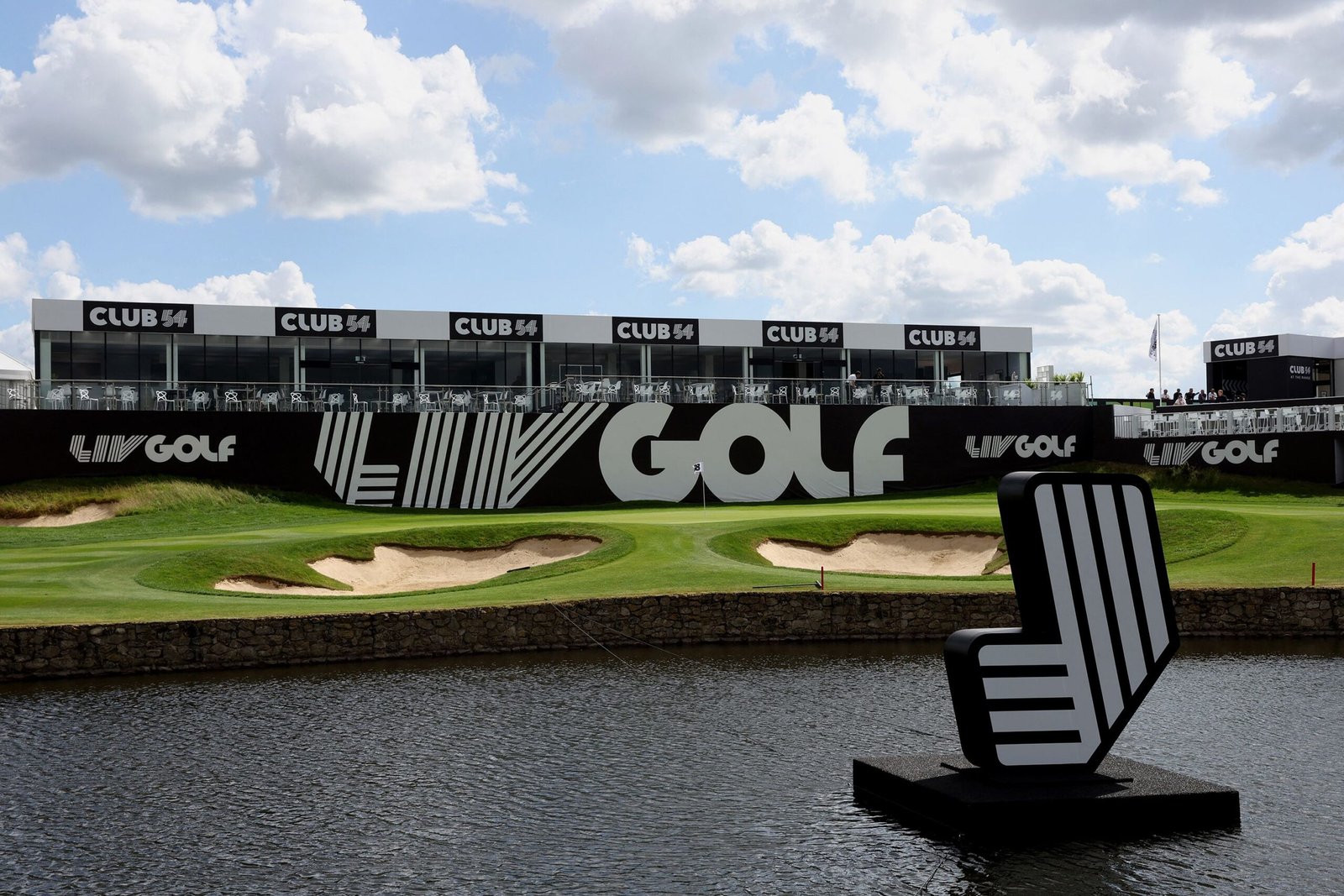
How can golf save itself? The advent of LIV has divided the sport and the sport needs to be undivided. The fact that it has been allowed to remain in a state of chaos is a disgrace and nearly all the participants are guilty to some degree. No surprise there. Most sports organizations are run by self-serving, blinkered idiots. They can’t see the bigger picture and don’t want to give up their slice of power. As a result, they don’t have the answers. Luckily, I do.


Indentured independent contractors
Unlike football, golf doesn’t have a powerful, world governing body like FIFA. It has the R&A in Europe and the USGA in the United States and they generally govern the game of golf and the rules of golf, as well as events like the four majors. There are many tours around the world, including the DP World Tour (formerly the European Tour), the Australasian Tour, the Champions Tour, the Sunshine Tour, the Japan Tour, the Asian Tour, the Korean Tour and, of course, the PGA Tour, which also controls the Korn Ferry Tour and PGA Tour Americas, both of which are feeder tours for the PGA Tour.

And then along comes LIV, throwing cash around to tempt players to abandon their commitments to the PGA Tour and play on an abbreviated but highly lucrative new tour of three-day tournaments with a closed field.

The PGA Tour cries foul, saying these players are breaching their contracts and have no right to jump ship, even though the PGA Tour calls these players “independent contractors.” The contracts state that these “independent contractors” can’t play anywhere else without permission from the PGA Tour. But restriction of trade is illegal. In the United States, “restraint of trade covers a broad range of activities, including:
– Creating a monopoly;
– Coercing someone to stop doing business;
– Using non-compete clauses or other contract provisions to prevent someone from conducting business;
– Negatively affecting someone’s ability to conduct business freely.”


The PGA Tour wanted to dominate professional golf and was very angry when it found out it couldn’t. On the surface, LIV’s intervention was a vulgar attack on the PGA Tour. But LIV didn’t want to operate in a vacuum and approached the PGA Tour to come to an agreement so that everyone could play golf happily. The PGA Tour refused to talk, and this was a stupid, irrational and self-defeating misstep. LIV didn’t want to destroy the PGA Tour; it wanted to complement it.

But like a jilted husband, the PGA Tour and its lackeys in Europe lashed out, invoking fines and bans for the rebel players, and even penalizing college players.

Talk about a resolution
Clearly, it needs to be resolved. Of course, some people might not want it to be resolved. Tens of players have earned PGA Tour cards because some of the world’s best golfers are playing on the LIV tour. A number have become winners for the same reason. Would Scottie Scheffler be so dominant if Jon Rahm, Brooks Koepka and Bryson De Chambeau were still playing on the PGA Tour? I think not. LIV has created opportunities for many journeyman players on the Korn Ferry and PGA tours, but that’s actually a good thing. People can see just how good a golfer ranked #150 or #200 can be. The elitism of the PGA Tour has damaged the game of golf. OK, LIV is a closed shop, but it has livened up the sport and given it new ideas, ideas that the PGA Tour has been happy to steal.

Lovers of golf do not want to see division and professional golf should provide a stable living for all its practitioners, not just the top 100. The Players Impact Program is an insult to golfers lower down the order. The idea that players who did not jump to LIV should get a bonus is absurd. Everyone on the PGA Tour has already benefited professionally and financially by the absence of some of the world’s best golfers.

So, we need a settlement. That settlement should make professional golfers true “independent contractors” so that they can play anywhere they want (subject to some eligibility rules). The irony is it’s so easy. By banning LIV golfers from PGA Tour events, it was the PGA Tour that suffered.

The further irony is that the LIV golfers did not want to leave their respective tours and in truth there was no reason why they should have. The top golfers always want to play in the top PGA Tour events, as well as the majors and the Ryder Cup. If the PGA Tour had said, “OK, let’s see how we can make this work,” things would have worked out fine.

Having criticized the PGA Tour, LIV also can’t escape criticism. Its ambush of the PGA Tour and DP World Tour and even college golf was crude and largely unnecessary. Better timing could have allowed the players to voluntarily hand in their PGA Tour cards.

No harm done
The truth is LIV was never going to do much damage to the PGA Tour. The PGA Tour basically damaged itself. The PGA Tour said players couldn’t play in tournaments that clash with PGA Tour events without permission. This doesn’t make sense. For a start, most of the top golfers play less than half the events in a year and some PGA Tour tournaments clash with (drum roll) … other PGA Tour tournaments. If the PGA Tour can schedule tournaments against itself, why can’t LIV (and let’s not forget tournaments in other parts of the world, especially the DP World Tour, which is played on far more interesting courses than the PGA Tour)?

Here’s an interesting concept for the PGA Tour: make your golfers true independent contractors and eliminate any restrictions about playing events that clash with PGA Tour events. This, I believe, is what golf fans would like to see.

Freedom is only going to benefit golf. I’m not saying that the PGA Tour shouldn’t make rules or even require a minimum number of tournaments, but it can rationalize its current system. Tennis did that by grading its tournaments and awarding points accordingly. The world tours can come up with a universal grading system (which it kind of has already for world ranking points) and apply it to their tours. (My system is: The points value of a tournament is determined by the world ranking of the top 10 players in that tournament.) The players can then decide their own schedules. I’m pretty sure the PGA Tour will still win out. Three of the majors are still in the U.S., plus the Players Championship. (I would like to see a World Major added to the international golf schedule, classifying it as a major and moving it to different parts of the world every year). It will be in LIV’s interests to make a schedule based around the top events in the PGA Tour schedule, partly to ensure that the top players will play and also to avoid antagonizing the PGA Tour.

Cruel and unusual punishment?
That’s all good, but we still have to deal with LIV, whose ambush of the PGA Tour was underhand. The elephant in the room is punishment. The PGA Tour and the DP World Tour went nuts, banning players outright and imposing ludicrously high fines (many of which LIV has paid). Let’s remember, the PGA Tour wants the top players back, so imposing fines of $100,000 a week is just stupid. If you want the players back, you have to find a reasonable way to do it. So, step 1: fine the players according to their status in the game, which can be determined by how much they’ve taken home in prize money on the relevant tours during their career.

Phil Mickelson will be at the top end of that scale, having won nearly $97 million. Fine him 1 percent of that total. Alternatively, you could come up with a system based on how many tournaments he’s competed in or won, but there’s no reason to make it complicated. A $970,000 fine for Phil makes sense to me.

The second part of re-integration is more difficult: ranking. Phil, a guy who won the PGA Championship four years’ ago, is currently No. 1,159 in the world. My feeling is that the LIV players have to start at a lower level. They can’t just jump back to their previous status. Where applicable, I would allow the top LIV players back into tournaments on sponsor exemptions because then the PGA Tour gets what it wants: the top players. Those lower down the totem pole will have to earn their places back. If they were on the DP World Tour or the Asian Tour, then those tours can decide how to allow them back. Many players have benefited – professionally and financially – from the absence of LIV players from the various tours, so it’s up to those LIV players to fight their way past this new batch of players on merit and earn their place back at the top table. A one-time massive Q school perhaps.

Team talk
If it sounds like I’m talking about the end of LIV, then I’m not. I like LIV. I like the 54-hole, shotgun start format and I think the PGA Tour should hold similar events. But I don’t see LIV as financially sustainable in its current format. One of my earlier ideas to change LIV was to make it a four-day event with the team event based on the fourth day of play. All four days would go to deciding the individual winner but the teams for the fourth day would be decided by the results of the first three days. So, Team 1 would consist of the players who finished first, 13th, 25th and 37th. Team 2 would consist of the players who finished second, 14th, 26th and 38th, and so on.

That works fine and would be exciting except that LIV’s financial goals include making the teams into money-making franchises. Having different players every week wouldn’t fit that model. But the current model – four players to a team – is too restrictive and if a player’s injured, the team’s down to three or using a sub. My idea is that each team consists of a squad of eight to 10 players. Now, remember, this will work out if the players really are “independent contractors,” so that players can switch between tours during the season. Sure, LIV can tie a few down with appearance fees to make sure the teams don’t consist of college players, but my vision is to have eight to 10 top players in a squad but still only have four players representing a team in any given week (although if there’s no clash with other events, having all eight or 10 players play over four days would be really cool).

And that system takes my next idea a step further: the LIV Tour should be a TEAM EVENT ONLY. Fans love team events and LIV has clearly been trying to capitalize on that, but not very successfully. The team element is always secondary to the individual competition. Put it as the focus of LIV and you have a dynamic, fan-friendly event (hopefully with better names than Smash or the Cleeks). Then, the franchise system will work. Fans would love it, broadcasters would love it, sponsors would love it, and money-grubbing agents and businessmen would love it.

The PGA Tour has already agreed, provisionally, to work with LIV and some say it needs LIV’s proposed $1.5 billion dollar donation. In short, professional golf needs to look at itself in the mirror; if it was starting from scratch, how would it be organized? Probably a lot better than it’s being organized at present.

Jun 9 2022

PGA Tour vs. LIV Golf: Who has the moral high ground?


By Fred Varcoe

As a former resident of Saudi Arabia (1980-1985) and a big golf fan, news of the Saudi Golf League really grabbed my attention. Except there is no Saudi Golf League. The knee-jerk Western media insist on calling the LIV Golf Invitational Series that because it is being financed by Saudi Arabia’s Public Investment Fund, which the West believes is blood money controlled solely by murderers.

In fact, it was set up by King Faisal – who some say was the most benevolent of Saudi monarchs – 50 years ago to aid projects within the Kingdom. In the last decade, it has expanded its influence in the international sphere and is now headed by Crown Prince Mohammed bin Salman Al Saud, the son of the current monarch, King Salman. Its most high-profile recent investment was the purchase of Newcastle United football club in England.

The Crown Prince has been condemned by many in the West who hold him responsible for the murder of journalist Jamal Khashoggi in the Saudi consulate in Istanbul in 2018. Those responsible for the murder had ties to the Crown Prince, so the West believes he has blood on his hands and anything he touches – such as investment funds – is tainted by this blood.

Once the connection is made, it’s hard to unmake, at least when it comes to Saudi Arabia. When it’s Israel, murders are done in self-defense.

On May 11, Israeli forces in the occupied West Bank killed Al Jazeera journalist Shireen Abu Akleh while she was covering raids by the occupying Israeli army. She was wearing a “press” vest and was not in a conflict zone. Her fellow journalists at the scene believe she was targeted and the Israeli military reportedly continued firing at the group of journalists she was with even after Abu Akleh and her colleague had been hit. To add insult to injury, Israeli police then attacked mourners at her funeral.

So, will the West try and stop investment from Israeli institutions? What will be the consequences for Israel? Well, we all know the answer to that. Israel operates with impunity in the Occupied Territories and beyond. Unlike Saudi Arabia, it will be free to sponsor any golf tournament it wants to without consequences or criticism. There were the usual pro-forma condemnations from the West and calls for an investigation, which, of course, will whitewash the whole affair. In truth, the killing has already been forgotten. But the LIV Golf Invitational Series is still blackballed for being a “Saudi” event. This is unbelievable hypocrisy.

Whiter than white?

Do you think the PGA Tour’s sponsors are whiter than white? Let’s look at some of them:

AFLAC: Irony of ironies, AFLAC was accused of misclassifying employees as “independent contractors” and was said to have “exploited workers, manipulated its accounting, and deceived shareholders and customers” by a number of former employees.
ASTELLAS: In 2016, Astellas UK was suspended from the U.K.’s pharmaceutical trade body as a result of “shocking” institutional failures, lies and “deception on a grand scale” in what was described as one of the worst cases ever considered by industry regulators. In 2019, the company in the U.S. agreed to pay $100 million over allegations that they violated the False Claims Act.
AVIS: In 2021, Avis Budget Group agreed to pay $10.1 million to resolve allegations that it violated the False Claims Act.
BRIDGESTONE: Bridgestone subsidiary Firestone produced defective tires that resulted in up to 192 deaths in the United States and paid Ford $240 million in compensation and had to settle many other lawsuits.
CITI: In 2018, Citibank reached a settlement to pay $100 million in the Libor scandal. It was also in bed with the Japanese mafia and lost their private banking license because of their mob connections.
COCA-COLA: Where to start? Wikipedia has a whole page on “Criticism of Coca-Cola,” ranging from carrying on business with Russia during the war in Ukraine, carrying on business with apartheid South Africa, racial discrimination (for which they had to pay $192.5 million) and allegations their partners were involved with murdering union reps.
FEDEX: FedEx previously partnered with the National Rifle Association, only breaking things off after coming under pressure from activists (i.e., when it hurt their bottom line).
MASTERCARD: According to Wikipedia, in 1996, “about 4 million merchants sued Mastercard in federal court for making them accept debit cards if they wanted to accept credit cards and dramatically increasing credit card swipe fees. This case was settled with a multibillion-dollar payment in 2003. This was the largest antitrust award in history.”
METLIFE: MetLife only recently decided to cut ties with Assault Weapon Investments, Controversial Weapon Investments and Tobacco Investments. It was fined $3.2 million in 2012 for “loan service and disclosure practices” and $10 million in 2019 for “internal control failures.”
MITSUBISHI ELECTRIC: CEO Takeshi Sugiyama resigned in 2021 after it transpired the company had been falsifying data for air conditioners and brake compressors for trains for over 35 years. It was also guilty of selling substandard rubber products. It also tried to subvert an inquiry into other malpractices, leading to the disciplining of 12 executives in December 2021.
PRICEWATERHOUSECOOPERS: PWC has a long list of dodgy practices, including a $229 million settlement over a multibillion-dollar accounting fraud with Tyco International, being paid to set up a tax avoidance scheme and gender discrimination. In January 2018, it was banned in India and fined $2.1 million over its involvement in a fraud case and was accused of conflict of interest in Angola.
SHELL OIL: Shell has been involved in Saudi Arabia for over 70 years and currently works with Al Jomaih and Shell Lubricating Oil Company in Saudi Arabia. Friends of the Earth says that Shell has a “long history of contempt for people and planet,” is “jointly responsible for murders in Nigeria,” “avoids taxes” and is “involved in bribing a former petroleum minister to achieve an offshore oil field.”
STRYKER: Who are they? Well, Stryker provides the “Official Joint Replacement Products of the PGA Tour and Champions Tour,” despite having to pay out $1.5 billion for defective hip implants and a further $80 million for unauthorized devices used in knee surgery.
MORGAN STANLEY: Even a condensed list of violations and dubious practices by Morgan Stanley would require a small book. Check out the Corporate Research Project page on Morgan Stanley. Highlights include racial and gender discrimination, a $2.6 billion settlement for selling “toxic securities” in 2015, $1.25 billion for Fannie Mae and Freddie Mac charges, and millions of dollars in other penalties for transgressions such as fraud and misleading practices.
The PGA also has FIVE “Official Betting Operators” (not including Phil Mickelson, who is alleged to have lost $40 million gambling). All legal, of course, but certainly not designed to improve people’s lives.
UPS is not a PGA Tour sponsor, but has recently divorced itself from two top golfers – Lee Westwood and Louis Oosthuizen – because of their connection to LIV. While they could claim it’s a commercial decision, it’s clear that they’re also trying to stay away from being associated with “blood money.” Like other golf sponsors, UPS finds it difficult to stay away from controversy. It lost a class-action lawsuit for racial discrimination in the late 1990s, had to pull an ad making false claims in 2009, had to pay $40 million “to end a federal criminal probe connected to deliveries it made for illicit online pharmacies,” had to pay “more than $25 million to settle charges it submitted false claims to the federal government” and had to pay $5.3 million to settle False Claims Act allegations earlier this year. Wait, there’s more….
In 2019, according to The Washington Post, “a group of United Parcel Service employees allegedly helped to import and traffic massive amounts of drugs and counterfeit vaping oils from Mexico, part of a scheme that exploited a vulnerability in the company’s distribution system, according to police. The lucrative operation at times involved moving thousands of pounds of marijuana and narcotics each week from narco-traffickers into the United States to destinations across the country, using standard cardboard boxes that were carefully routed through the private mail carrier’s trucking and delivery systems.”
According to a CNN report in 2019, a “white female [UPS] driver refused to deliver a package to a predominantly black neighborhood she referred to as ‘Nigger City’ and ‘NiggerVille’.”

This is not an in-depth dig into companies that sponsor the PGA Tour and golfers; it’s a quick flip through the internet.

Saudisney


And where does Saudi Arabia’s Public Investment fund put the rest of its money? Well, $43 billion is invested in the United States. So, if you go to Disneyland, ride an Uber, bank at Bank of America, use Facebook, play a Nintendo game or fly on a Boeing plane, you are taking advantage of Saudi “blood money.”

How about golf in Saudi Arabia? The DP World Tour established the Saudi International in 2019 – the year after the murder of Jamal Khashoggi – and a number of top golfers have taken Saudi money by playing in tournaments there.

Saudi Arabia’s policy of executing criminals and terrorists also came under scrutiny, especially after 81 people were executed in a single day in March 2022. Full details of the crimes weren’t available, but it was revealed that many were for terrorism, murder or conspiracy to murder. The PGA is based in the United States, which executes criminals. It also has events in Japan, which executes criminals (including 13 in a single month in July 2018). And in China, which arbitrarily executes so many people Amnesty International has lost count. It certainly outstrips Saudi Arabia.

The usual memes about people in Saudi Arabia being executed for being gay were dragged out, but these have to be taken with a pinch of salt. Although my time in Saudi Arabia was many years ago, the country I lived in for five years bore no resemblance to the country portrayed in the British media, which at the time were astonishingly racist in their depictions of Arabs. There was a gay clique in the building I lived in and it seemed to be party central for that crowd. None of them were executed.

What about other “crimes?” A number of foreigners where I worked were arrested for drinking alcohol, but they weren’t locked up in a hole for years on end; they were just deported. A lot of them had drinking problems before they went to Saudi Arabia. The Saudis knew people produced and drank alcohol; they just wanted to keep it under control. Once when I went to buy a car, the young guy I was dealing with thought I might walk away from the deal. He told me his father wanted to meet me. He took me to his father’s office and left me. His father opened a draw in his desk and pulled out a bottle of whisky and two glasses. Deal sealed. (I was also arrested twice in Saudi Arabia but forgiven for my transgressions and allowed to stay in the country.)

Independence day

There’s also hypocrisy in the PGA Tour (and DP Tour) terming golfers “independent contractors,” yet severely restricting their trade by demanding permission to play in any non-PGA Tour event without permission. Yes, the golfers did agree to this, but did they have much choice? This stinks of monopoly and restriction of trade is illegal.

In the U.S., “restraint of trade covers a broad range of activities, including:
Creating a monopoly
Coercing someone to stop doing business
Forcing someone to change their business so it isn’t as competitive
Using non-compete clauses or other contract provisions to prevent someone from conducting business
Negatively affecting someone’s ability to conduct business freely.”


I’m not a lawyer, but how does the PGA Tour reconcile this with their designation of golfers as “independent contractors?”

Let’s face it, the PGA Tour is just one competition, effectively in one country. Why is it so scared of the LIV events? The obvious reason is that it might lessen the value of its own tour, but that’s highly unlikely. We already have three of the four majors in the U.S., as well as strong tours in Europe, Japan, Canada, Asia, etc., and they co-exist with the PGA Tour. And there are even times when the PGA Tour competes with itself, holding two events at the same time, so surely there’s room for alternative events. On top of that, not all the top players play every week, so if they’re not playing in a PGA event, why should they need permission to play elsewhere?

The truth is the PGA Tour is scared of competition. Three years ago, it increased the number of tournaments golfers must play every year for them to be able to keep feeding off the golden goose. As a result of LIV, it has gone even further by targeting college players. On May 11, the PGA Tour announced the following, according to the Golf Channel website:

“For college players hoping to both earn status through PGA Tour University and compete in the LIV Golf Invitational Series, they will now have to pick one or the other. PGA Tour U announced on Wednesday an amendment to its rules of regulations. Effective immediately, players will forfeit their PGA Tour eligibility if they tee it up in a professional tournament that is unranked by the Official World Golf Ranking and not otherwise approved by the PGA Tour. This news comes after last week’s report that LIV Golf had extended membership to the top six players in the World Amateur Golf Ranking, a group that includes several players currently in the PGA Tour U Velocity Global Ranking.”

A different experience

The LIV events are offering a different experience and what can only be described as silly money, even sillier than the PGA’s massive purses. In fact, the top PGA golfers earn so much money they really don’t need to look elsewhere. But to earn that money, they have to play a 72-hole stroke-play tournament and make the cut. LIV is proposing, no-cut, 48-member, three-round tournaments. It’s a different format (there’s also a team element to add spice to the results). The sad part of this is that the PGA, one of the most conservative organizations in sport, believes it has the perfect product and can’t even see a need for change. Sometimes, sports organizations need a good kick to get them moving. Cricket famously changed when outsider Kerry Packer tried to buy it. Cricket still has its five-day tests, but the rest of the game has been transformed with different formats and leagues around the world. Volleyball is another sport that has reinvented itself over the years with radically different rules and new tournaments. Golf, like football, seems to wallow in its own self-importance. It’s a great sport, but that doesn’t mean it can’t change and in recent weeks, a number of top golfers have said that there’s “room for improvement” in golf.

Greg Norman, LIV’s front man, has been trying to change the PGA-centric view of the sport for years. LIV is not his first attempt at shaking up the sport. Whether or not he’s got his tactics right remains to be seen. Perhaps going head-on against the PGA wasn’t the best move. Buying the Asian Tour could have given him more legitimacy (of course, I don’t know if it wants to be bought but it agreed to sanction the LIV events after a $300 million investment) and less conflict, and he could have grown his product from there. Swooping down from above with a billion dollars to spend was a bit crass and his “we’ve all made mistakes” quote concerning the murder of Jamal Khashoggi should have stayed in his overactive mouth.

However, it doesn’t mean that Saudi Arabia has to concede the moral high ground to America, its snooty golf tour or its pampered, hypocritical golfers. I’m sure they feel morally just when they fill their environmentally unfriendly cars and jets with gas from Saudi Arabia and play games on their Made-in-China electrical goods.

The LIV Series is just another series of golf tournaments. If golfers sponsored by racist and criminal companies think they have the moral high ground, fine; they can stay where they are. But if you want to live your life on hyper-ethical grounds, you’d better clean up your act to vegan levels. “Blood money” hides in the strangest places.